Home Elevation Designs for Indian Houses – All Styles

Explore 300+ house elevation designs in modern, Kerala, traditional & contemporary styles. Filter by floor count or plot width to find your perfect look.

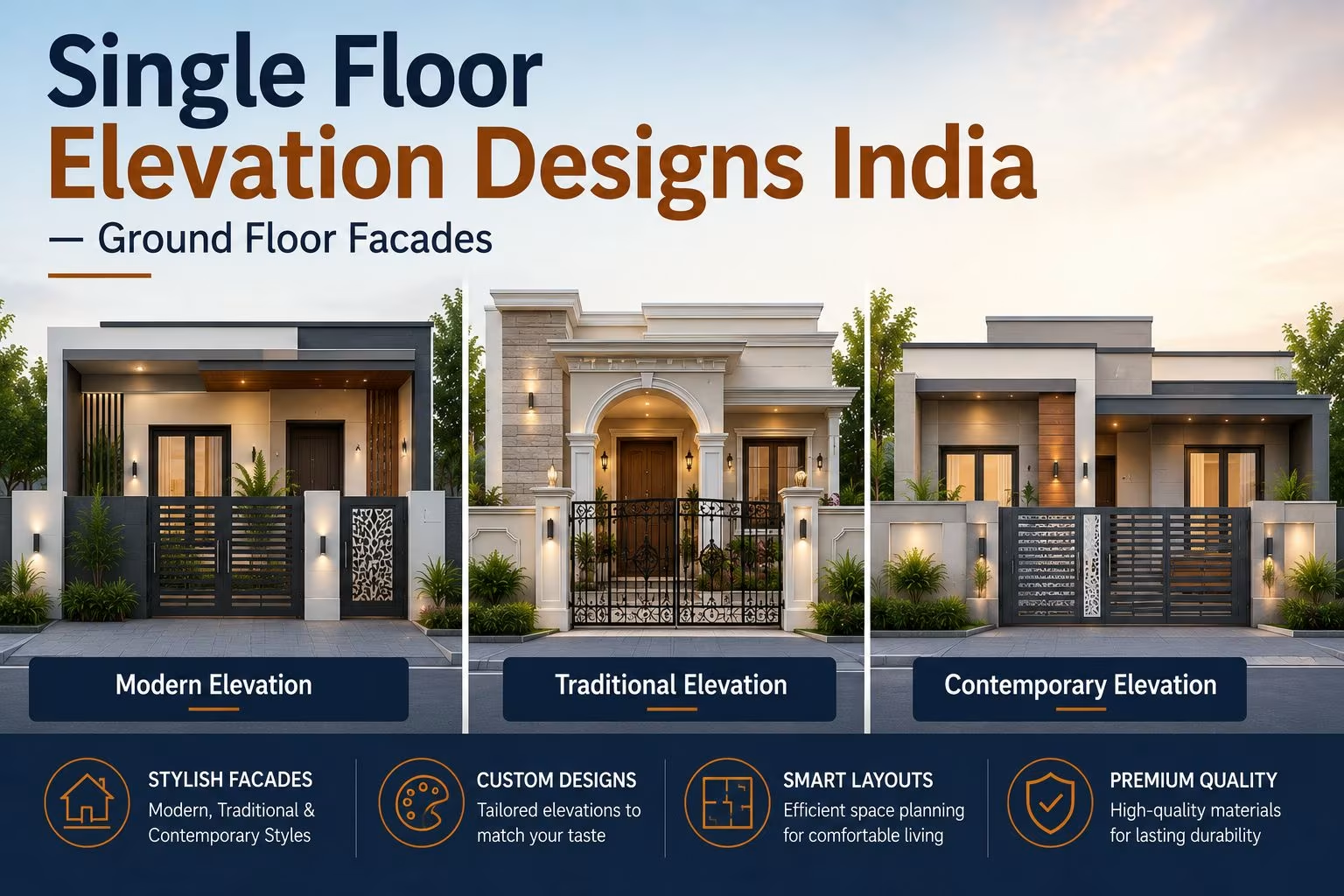
Single Floor Elevation
Ground floor elevation designs for 1-floor houses.
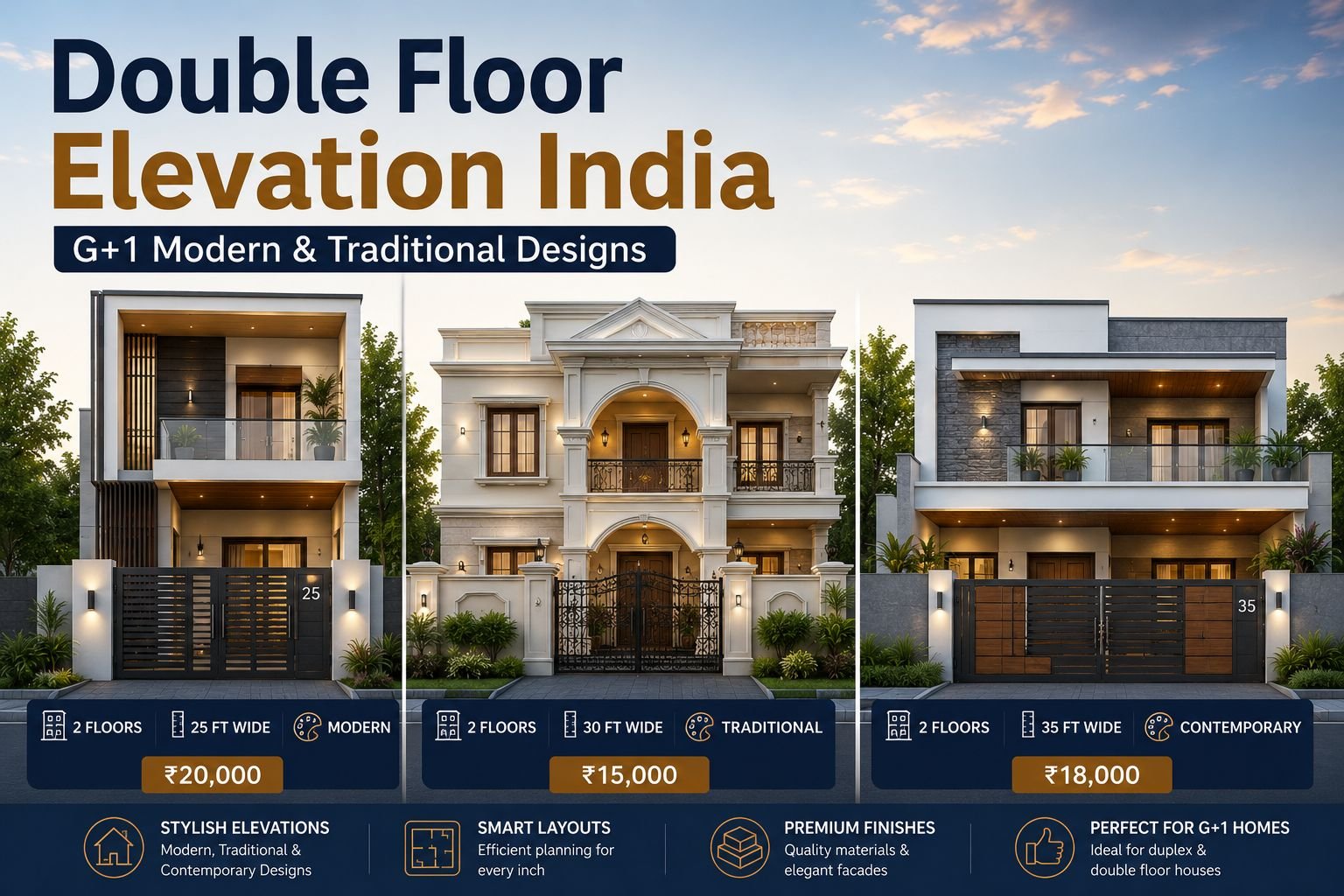
Double Floor Elevation
G+1 elevation designs for duplex and double-floor homes.
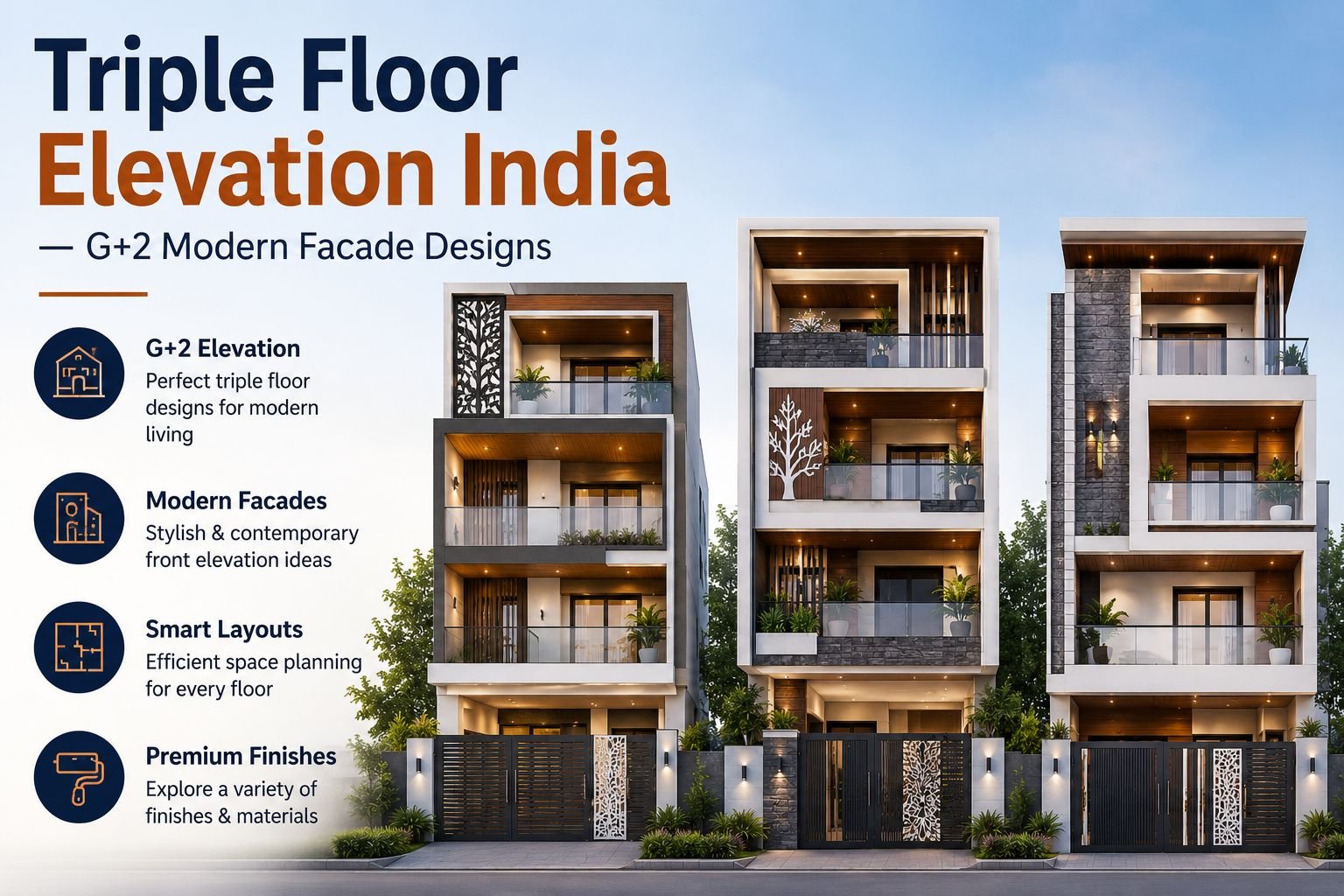
Triple Floor Elevation
G+2 elevation designs with 3 floors.
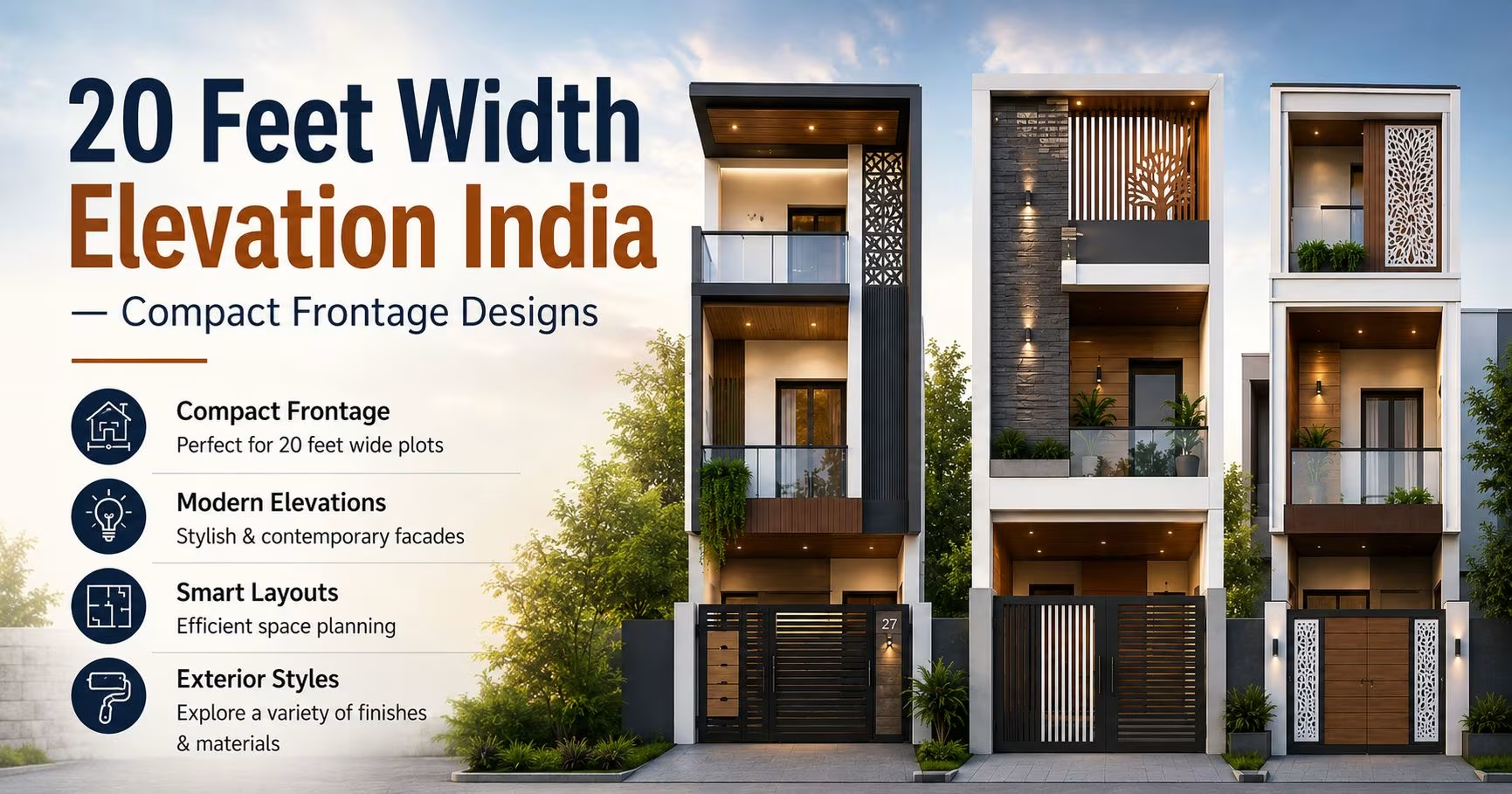
20 Feet Width Elevation
Compact elevation designs for 20-foot frontage plots.
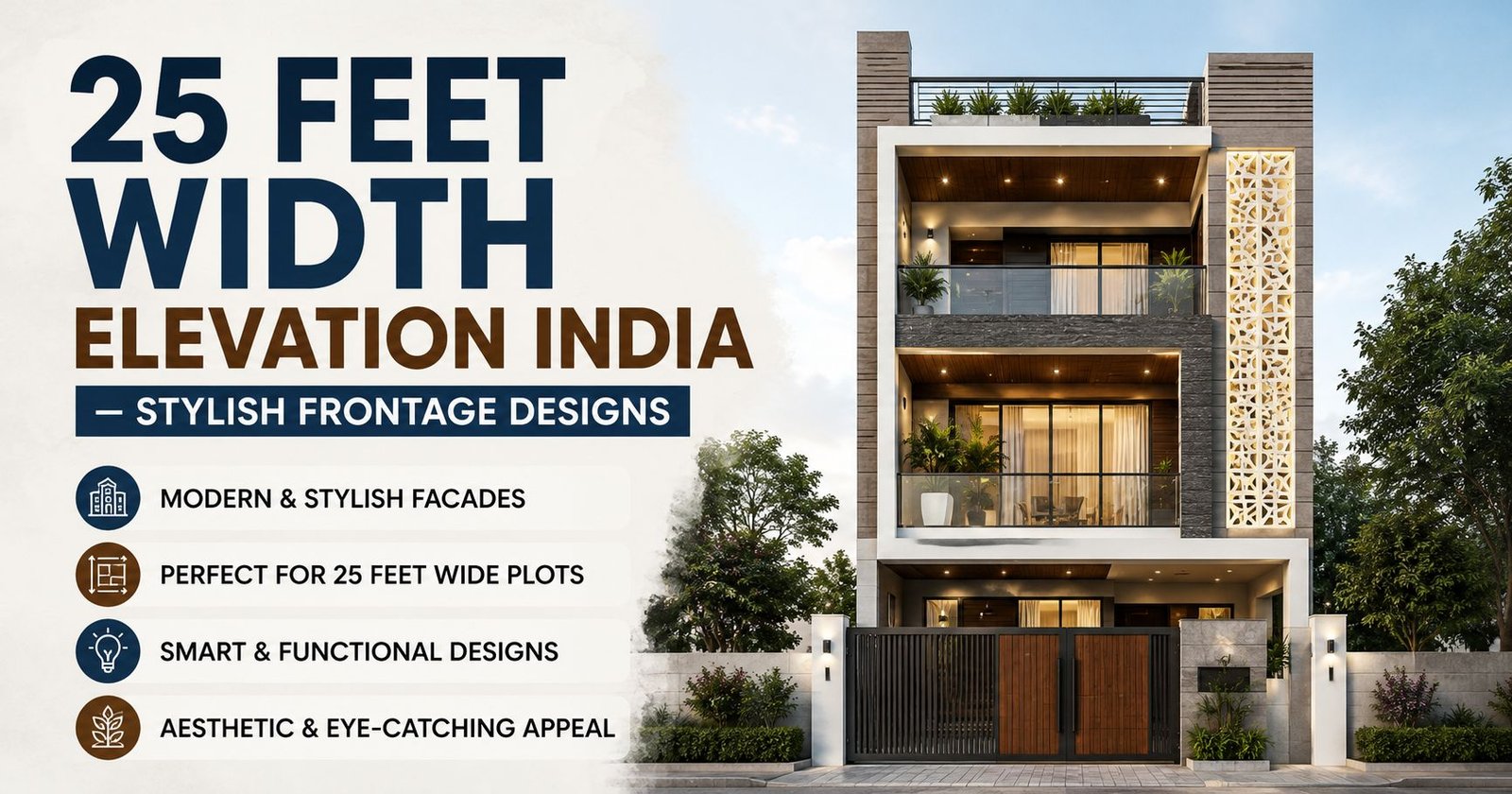
25 Feet Width Elevation
Elevation designs for 25-foot wide plots.
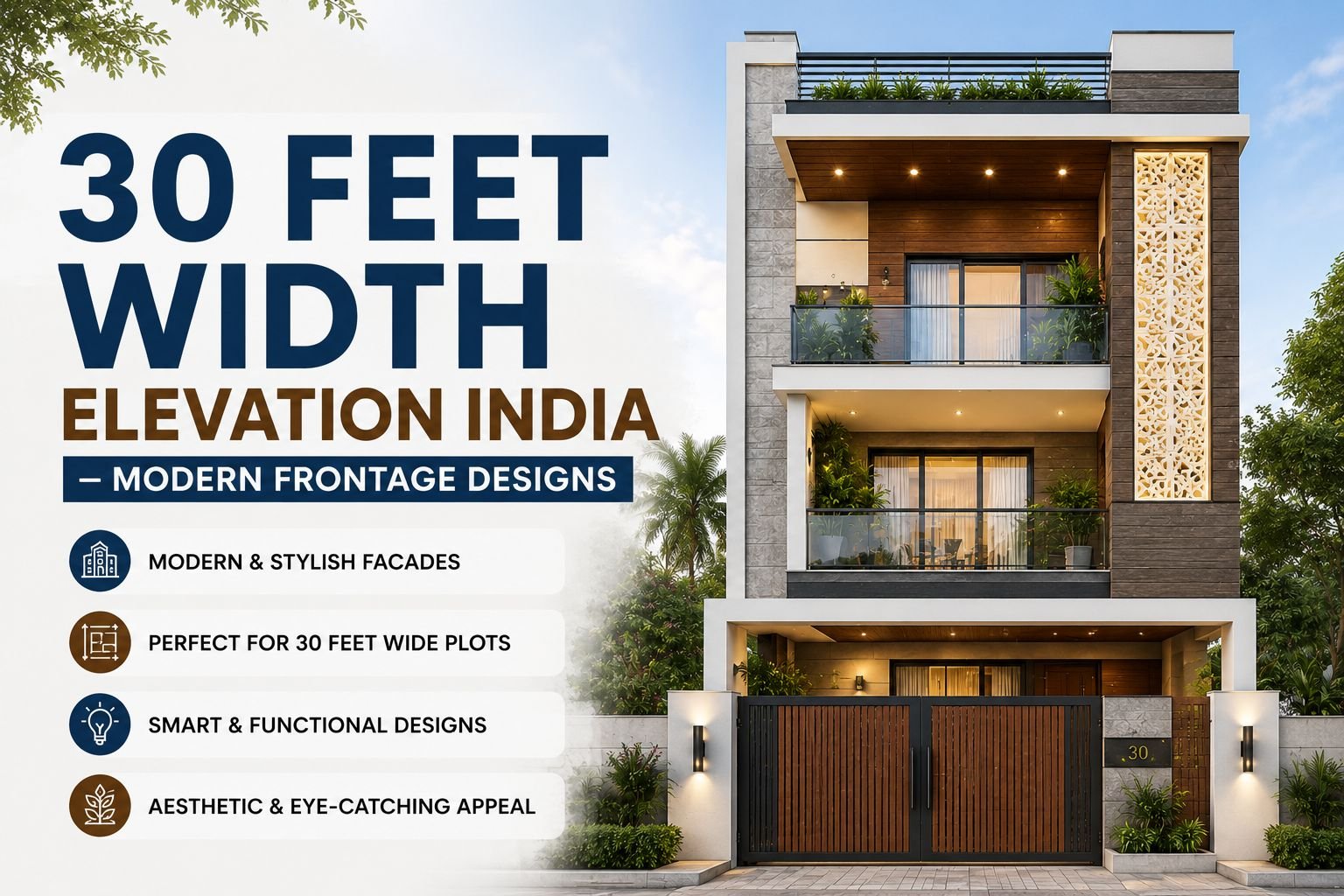
30 Feet Width Elevation
Elevation designs for standard 30-foot frontage.
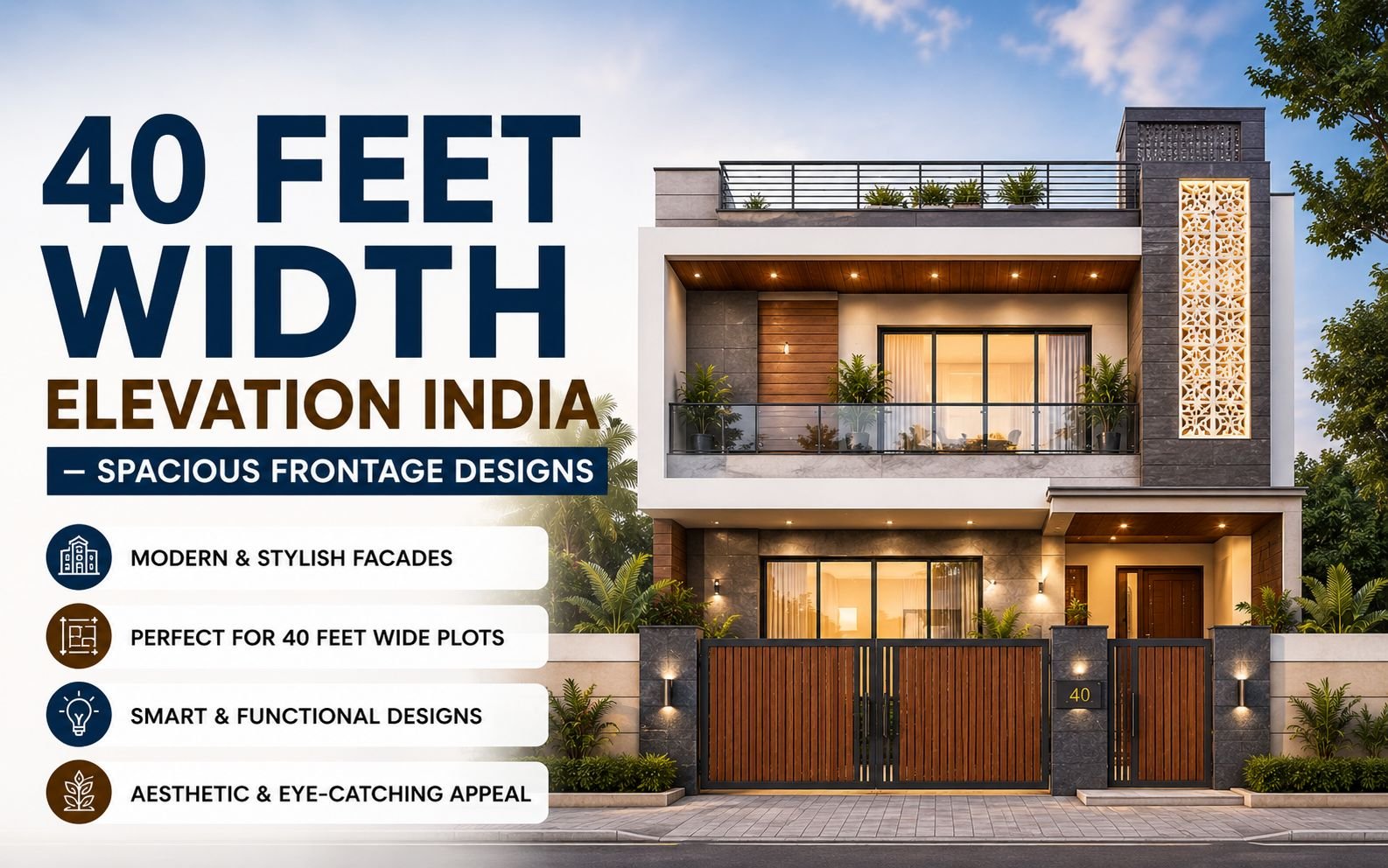
40 Feet Width Elevation
Spacious elevation designs for 40-foot wide plots.
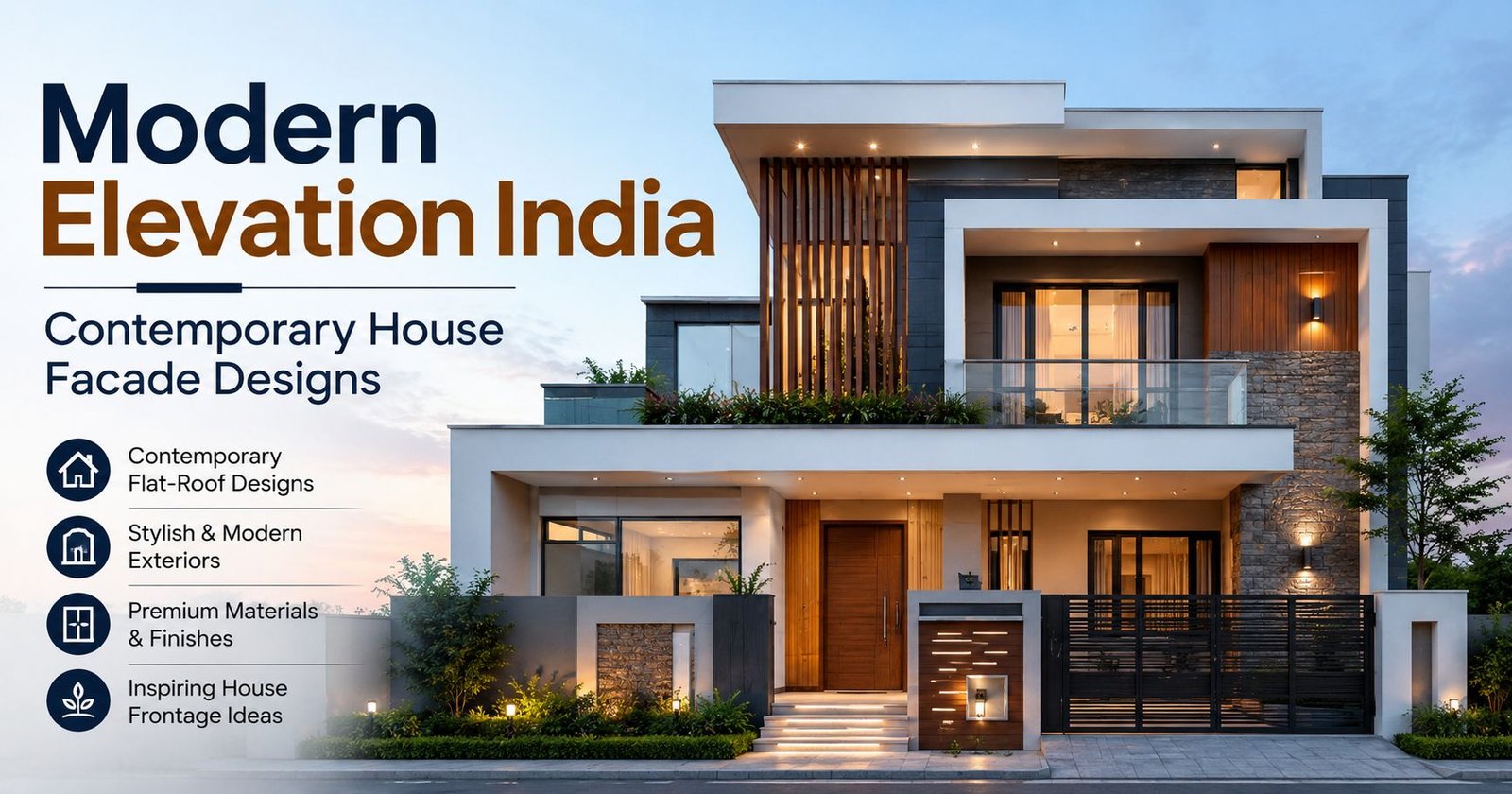
Modern Elevation
Contemporary flat-roof modern house elevations.
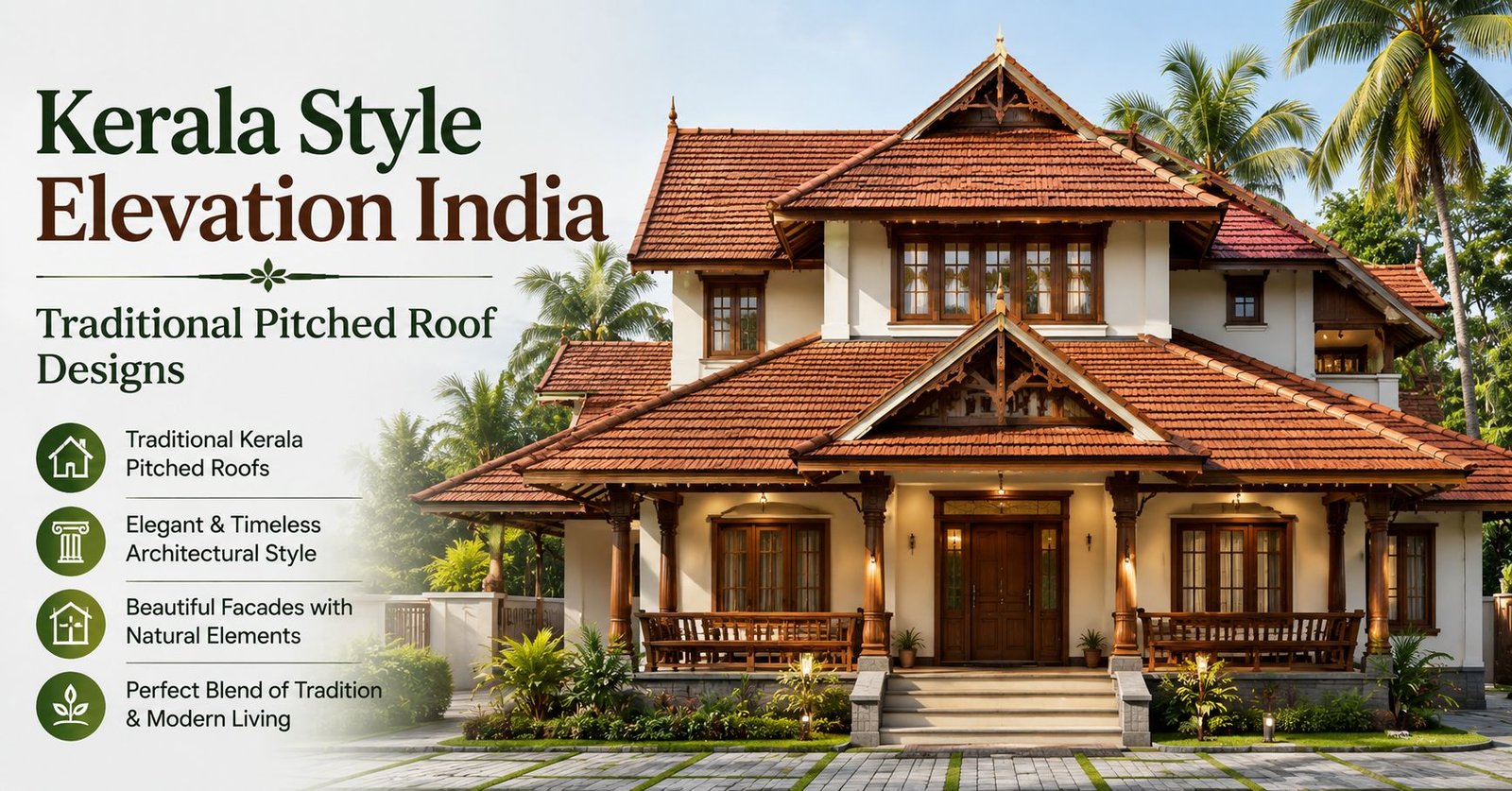
Kerala Style Elevation
Traditional Kerala pitched-roof elevations.
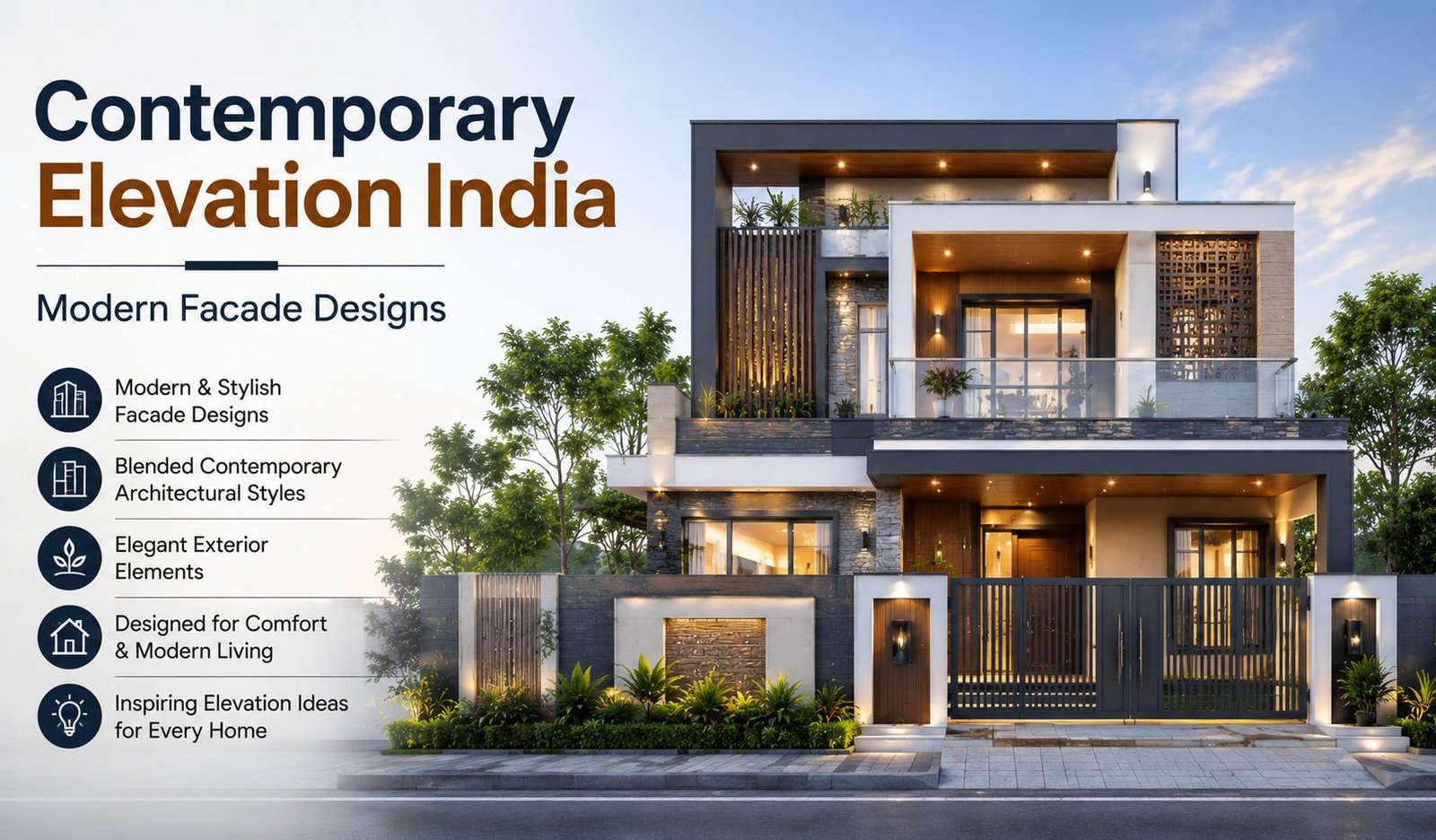
Contemporary Elevation
Blended contemporary elevation styles.
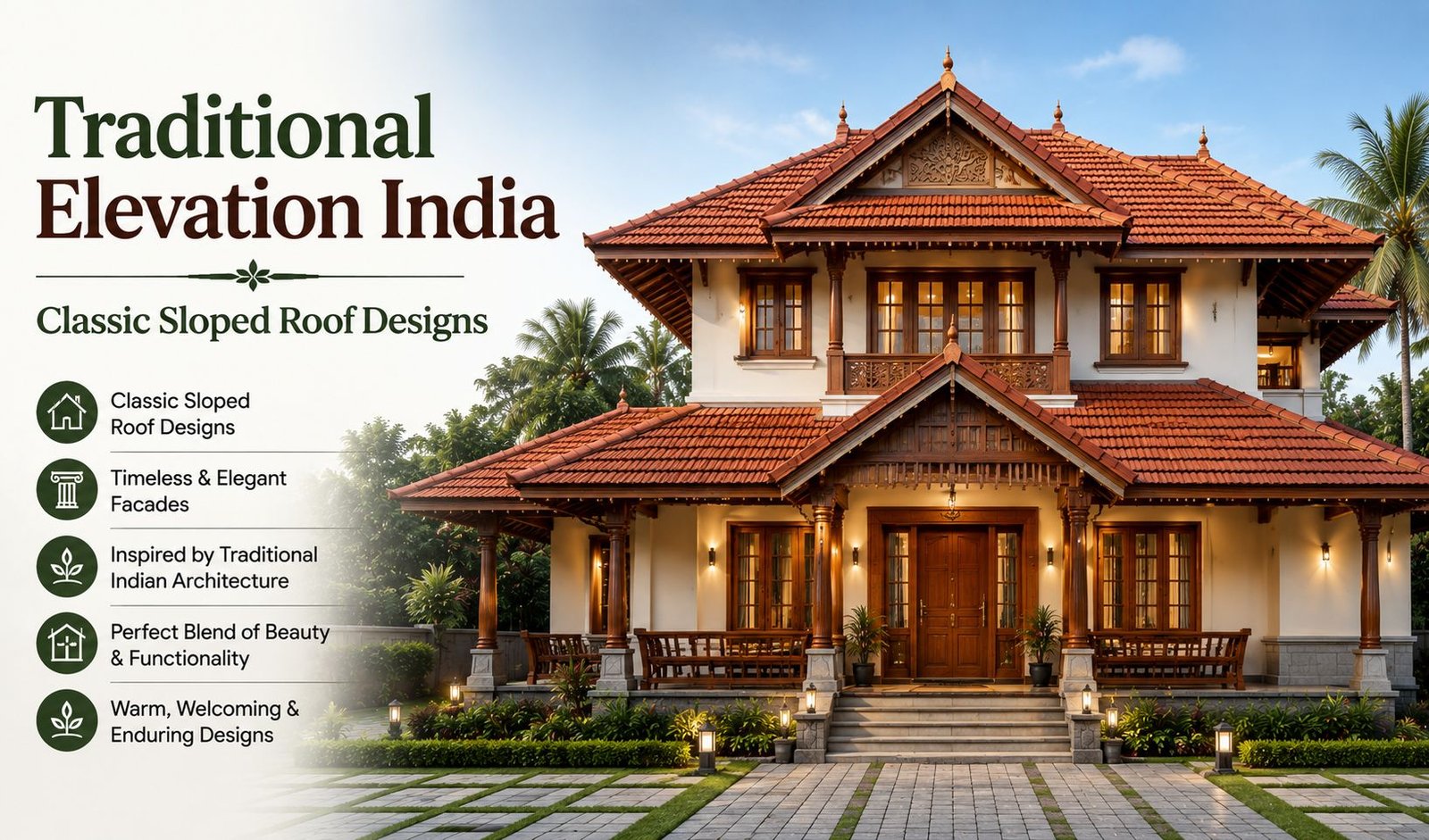
Traditional Elevation
Classic sloped-roof traditional elevations.
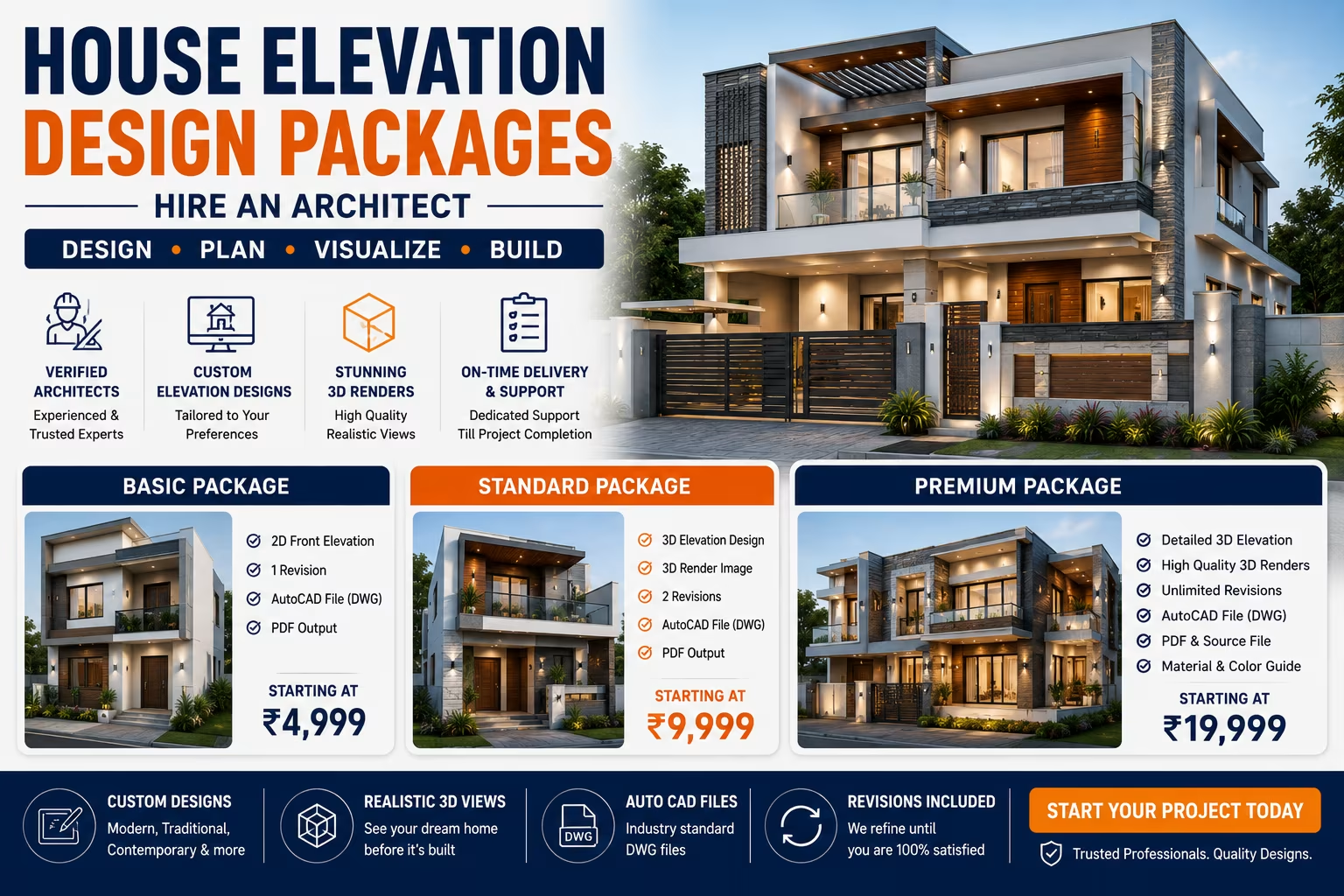
Elevation Design Packages
Get your house elevation designed by our architects.
From ₹8,000 →

Home Elevation Designs for Indian Houses – All Styles

Your home's elevation is the first thing the world sees. It shapes how your house is perceived from the street, reflects your personal taste, and sets the tone for everything inside. At BuildHQ, we've brought together an extensive collection of house elevation designs suited to Indian homes — from compact single-floor residences to multi-storey villas — across every architectural style popular in India today.

Whether you're working with an architect for the first time or refining ideas before your initial meeting, browsing elevation designs early in the process helps you communicate your vision clearly and avoid costly revisions later.

What Is a House Elevation Design?

In architecture, an elevation is a scaled drawing or rendered view of a building's exterior face — typically the front, but also the sides and rear. A front elevation shows the facade: the roofline, windows, doors, columns, cladding materials, textures, and overall proportions of the structure as seen from outside.

For Indian homeowners, the front elevation is more than a technical drawing. It's a statement of identity. It influences neighbourhood aesthetics, resale value, and long-term pride of ownership. Choosing the right elevation style before construction begins — rather than leaving it as an afterthought — leads to better outcomes both aesthetically and structurally.

Popular House Elevation Styles for Indian Homes

India's architectural landscape is extraordinarily diverse. Regional traditions, climate considerations, and evolving urban tastes have produced a wide range of elevation styles that work across different plot sizes, budgets, and locations.

Modern Elevation Designs

Modern elevations are the most widely chosen style in urban India today. They are defined by clean horizontal and vertical lines, flat or low-pitched roofs, large windows, minimal ornamentation, and a strong emphasis on geometric form. Materials like exposed concrete, glass panels, aluminium cladding, and stone veneer are commonly used.

Modern elevations work exceptionally well for narrow urban plots where simplicity of form maximises the sense of space. They also age well — the restrained aesthetic doesn't go out of fashion as quickly as heavily decorated styles.

Suitable for: Urban plots, 20–40 ft wide frontages, G+1 to G+3 constructions, contemporary lifestyles.

Contemporary Elevation Designs

Contemporary style sits close to modern but allows more expressive detailing. Where modern is strict and minimalist, contemporary embraces curves, mixed material combinations, cantilevered volumes, and asymmetrical compositions. You'll often see a blend of stone cladding, wooden panelling, and large-format glazing in the same facade.

Contemporary homes are popular among homeowners who want visual impact without committing to a traditional or classical look. They allow architects creative flexibility while remaining grounded in a liveable, practical aesthetic.

Suitable for: Corner plots, wider frontages above 30 ft, premium constructions, hillside or villa sites.

Kerala Traditional Elevation Designs

Kerala's traditional architecture — rooted in the Tharavad and Nalukettu building forms — is one of India's most distinctive regional styles. Characterised by sloping tiled roofs with deep overhangs, wooden columns and brackets, latticed ventilation screens, and shaded verandahs, Kerala elevations combine climate responsiveness with deep cultural identity.

Modern interpretations blend the traditional sloping roof and wooden accents with contemporary internal planning, updated materials, and improved weather resistance. This hybrid style is particularly popular in Kerala, coastal Karnataka, and parts of Tamil Nadu.

Suitable for: Kerala and coastal South India, plots with garden setbacks, heritage-conscious homeowners, high rainfall zones.

South Indian Traditional Elevation Designs

Beyond Kerala, the broader South Indian traditional style encompasses Chettinad architecture from Tamil Nadu, Mangalorean tiled-roof homes, Andhra courtyard houses, and Telangana vernacular forms. Common features include decorated entrance gateways (gopuram-inspired pilasters), carved stone or wood detailing, terracotta roof tiles, and symmetrical facade compositions.

These elevations carry strong cultural resonance and are frequently chosen for ancestral property renovations and homes built in semi-urban or rural areas of South India.

Suitable for: South Indian cities and rural areas, ancestral homes, plots with generous setbacks, traditional-minded homeowners.

North Indian and Rajasthani Elevation Designs

North Indian traditional elevations draw from Rajputana, Mughal, and colonial influences. Jharokha windows with detailed stone or plasterwork, arched doorways, jaali screens, and ornate cornices are hallmarks of this style. Rajasthani homes often feature warm sandstone tones and intricate geometric surface patterns.

These elevations demand skilled stone carvers and plasterers, and are best suited to areas where the architectural language is culturally familiar. Contemporary adaptations simplify the ornamentation while retaining the characteristic arches and symmetry.

Suitable for: North and Central India, Rajasthan, heritage cities, plots with generous frontage, high-budget custom homes.

Double Floor Elevation Designs

G+1 constructions are the most common residential format in Indian cities. Double floor elevations need to balance visual weight — the upper floor must feel proportionate to the ground floor without looking top-heavy. Well-designed double floor facades use balcony treatments, varied window rhythms, projecting elements, and material contrast between floors to create visual interest.

Popular approaches include a stone-clad ground floor with a smooth plaster upper floor, or a recessed upper floor with a generous balcony projection creating shade for the ground level.

Suitable for: Standard urban plots, 20–40 ft frontages, family homes with ground floor parents' quarters and upper floor for children.

Triple Floor and G+2 Elevation Designs

As Indian cities grow vertically, G+2 residential construction is increasingly common, particularly for joint families, rental properties, and semi-commercial mixed-use buildings. Three-storey elevations present the greatest design challenge — maintaining proportionality across three levels while avoiding a monotonous stacked appearance.

Skilled designers break the vertical mass through setbacks at upper floors, projecting staircase towers, roof terraces with pergolas, and alternating material finishes between floors.

Suitable for: Urban plots in high-density areas, rental income properties, joint family homes, commercial-ground-floor residential layouts.

Duplex and Villa Elevation Designs

Duplex homes and independent villas on larger plots allow the greatest architectural freedom. Wider frontages, generous setbacks, and larger built-up areas give designers room to create dramatic facade compositions with double-height entrance porticos, curved driveways, landscaped forecourts, and feature walls.

Villa elevations in India frequently draw from tropical modern, Mediterranean, or Indo-contemporary styles — all adapted to local climate and material availability.

Suitable for: Plots above 1,500 sqft, premium residential layouts, gated community villas, high-budget custom homes.

Budget-Friendly Simple Elevation Designs

Not every home needs architectural extravagance. Simple, well-proportioned elevations with good window placement, clean lines, and quality finishing materials can look elegant at a fraction of the cost of complex designs. Single-floor homes and compact double-floor houses with straightforward forms often age the most gracefully.

At BuildHQ, we include a dedicated collection of simple elevation designs that prioritise good proportions and practical detailing over visual complexity — ideal for first-time homebuilders and budget-conscious projects.

Suitable for: First-time homebuilders, Tier-2 and Tier-3 cities, compact plots, budget constructions.

How to Filter Elevation Designs on BuildHQ

Our elevation design collection is organised to make browsing practical rather than overwhelming. You can filter designs by:

Number of Floors — Single floor (G), Double floor (G+1), Triple floor (G+2), Duplex, Villa

Plot Width — Below 20 ft, 20–30 ft, 30–40 ft, 40–60 ft, Above 60 ft

Architectural Style — Modern, Contemporary, Kerala Traditional, South Indian Traditional, North Indian, Rajasthani, Colonial, Indo-Contemporary

Roof Type — Flat roof, Sloping tiled roof, Hip roof, Mixed roof, Terrace with pergola

Budget Tier — Basic, Standard, Premium

Region — South India, North India, West India, East India, Central India

Combining filters — for example, "Modern + Double Floor + 25 ft frontage + Standard budget" — quickly narrows the collection to the most relevant designs for your specific situation.

What Makes a Good House Elevation Design for Indian Conditions

Choosing an elevation purely on visual appeal without considering site conditions and climate leads to problems down the line. Here are the functional considerations that the best Indian home elevations balance alongside aesthetics.

Sun Orientation and Shading — In most parts of India, a west-facing facade receives intense afternoon sun. Elevation designs for west-facing plots benefit from deep chajjas (sunshades) above windows, vertical fins, and recessed openings to reduce heat gain. East-facing plots can accommodate larger glazed openings since morning sun is gentler.

Rainfall and Weathering — In high-rainfall coastal and hilly areas, elevation designs with steep-sloped roofs, large overhangs, and weather-resistant cladding materials outperform flat-roof modern designs over time. Material choices like exposed concrete and plain plaster require regular maintenance in humid climates.

Plot Proportions and Setbacks — A design that looks balanced on a 40 ft frontage may look awkward squeezed into a 20 ft plot. Always match the elevation composition to your actual plot dimensions rather than adapting an ill-fitting design.

Neighbourhood Context — An ultra-modern glass-dominant facade stands out beautifully in a premium layout but can feel out of place in a traditional streetscape. Contextual design — responding to the surrounding built environment — generally produces more satisfying results.

Maintenance Practicability — Heavily textured stone cladding, ornate cornices, and complex joinery look impressive when new but require regular cleaning and maintenance. Assess how practical your chosen elevation finish will be to maintain over 20–30 years.

Materials Commonly Used in Indian House Elevations

The materials visible on your facade define the character, maintenance requirements, and cost of your elevation design.

Exposed Brick — Warm, textured, and low-maintenance. Popular for contemporary and industrial-inspired elevations. Works well as an accent on portions of the facade rather than the entire surface.

Stone Cladding — Granite, sandstone, slate, and Kota stone veneers add weight and permanence to facades. Widely used for ground floor cladding in standard and premium homes.

DECO or ACP Panels — Aluminium composite panels allow bold colour choices and clean lines for modern facades. Increasingly popular for feature walls and entrance canopies.

External Grade Paint — The most common and economical facade finish. Quality exterior emulsion paints from established brands provide reasonable durability in Indian conditions with proper surface preparation.

Glass and Glazing — Large fixed glass panels, frameless glazed sections, and glass railings dramatically increase visual openness. Best used in moderation in hot climates to avoid thermal discomfort.

Wooden Cladding — Teak, cedar, and engineered wood panels add warmth and texture. Requires treatment and periodic maintenance in humid or rainy climates but delivers excellent aesthetic impact.

GRC Panels — Glass Reinforced Concrete panels allow complex decorative forms — arches, cornices, columns, jaali patterns — at lower cost than hand-carved stone. Widely used for North Indian and Rajasthani style elevations.

Elevation Design and Construction Cost

The complexity of your elevation design directly impacts your construction cost. Here is a general guide to how elevation choices affect your overall budget.

Simple flat plaster finish with standard windows — Adds minimal cost above base structure; ₹0–₹50 per sqft of facade area.

Stone cladding on partial facade — ₹80–₹200 per sqft of cladded area depending on stone type and thickness.

ACP cladding panels — ₹150–₹350 per sqft of panel area including installation.

GRC decorative elements — ₹200–₹600 per sqft of GRC area depending on design complexity.

Large glazed sections — ₹500–₹1,500 per sqft of glazed area for standard aluminium-framed systems; higher for structural glass.

Wooden cladding — ₹400–₹900 per sqft depending on wood species and treatment.

Keeping your elevation design choices in scope with your overall construction budget avoids the common situation where a homeowner commits to a premium facade look without accounting for the additional cost it carries.

Working With an Architect on Your Elevation Design

BuildHQ's elevation design collection is intended as an inspiration and reference tool, not a substitute for professional architectural advice. Here's how to use it most effectively when working with your architect.

Start with a Mood Board — Browse BuildHQ and save 8–12 designs that appeal to you. Look for common threads — are you consistently drawn to flat roofs or sloping ones? Stone cladding or smooth plaster? Large windows or smaller framed openings? These patterns reveal your actual preferences more reliably than verbal descriptions.

Communicate What You Don't Like — Showing your architect three designs you dislike is often more useful than showing ten you like. Ruling out directions early saves iteration time.

Discuss Site-Specific Constraints Early — Your plot's orientation, setback rules, floor space index limits, and neighbouring structures will all influence what's feasible. Bring your BuildHQ inspiration references to the first site visit, not just the office consultation.

Separate Inspiration from Specification — An elevation image from BuildHQ shows a design concept. Your architect will adapt, simplify, or evolve it to suit your specific plot, budget, and local building regulations.

Frequently Asked Questions — House Elevation Designs

How much does it cost to design a house elevation in India? Architect fees for complete residential design including elevations typically range from 3–8% of construction cost. For elevation-only or facade consultancy work, fees vary from ₹15,000–₹1,00,000+ depending on the architect's experience and scope of work.

Can I use a downloaded elevation design directly for construction? Elevation images serve as design inspiration. For actual construction, a licensed architect must prepare site-specific structural drawings, working drawings, and elevation details that comply with local building bylaws.

What is the most popular house elevation style in India in 2026? Modern and contemporary styles continue to dominate urban India, particularly for new constructions. Kerala traditional and South Indian hybrid styles remain strongly popular in their home regions. Simple, clean elevations with stone accents are the most widely executed across all regions.

Does the elevation design affect the construction cost significantly? The structural cost remains largely the same regardless of elevation style. The difference lies in facade finishing materials, cladding, glazing, and decorative elements — which can range from negligible for simple finishes to 15–25% additional cost for premium facade treatments.

How do I choose an elevation style for my plot width? As a general rule: plots below 20 ft benefit from vertical-emphasis designs with restrained horizontal elements. Plots between 20–40 ft suit most standard elevation compositions. Plots above 40 ft allow wider, more horizontal compositions and greater design freedom. Use BuildHQ's width filter to browse only designs suited to your specific frontage.

Find the Elevation That Defines Your Home

Your home's facade will stand for decades. It deserves careful thought, the right reference material, and a design that works as well in practice as it looks on screen. BuildHQ's elevation design collection gives you a comprehensive starting point — organised by style, floor count, plot width, and budget — so you can arrive at your design decisions informed and inspired.

Browse modern, traditional, Kerala, contemporary, and regional styles across 300+ elevation designs on BuildHQ — and build a home that looks exactly the way you imagined it.