Browse 500+ Indian house design styles — modern, contemporary, Kerala, traditional, duplex and villa designs.
Designing a home begins long before the first brick is laid. It starts with a vision — a sense of how you want your home to look, how it should feel to live in, and how it should serve your family for decades to come. At BuildHQ, we've assembled a collection of over 500 Indian house designs spanning every major architectural style, plot size, floor count, and budget tier — each accompanied by floor plans and elevation drawings to give you a complete picture of what's possible.
Whether you're starting from scratch with an empty plot or refining ideas before your first meeting with an architect, BuildHQ's house design collection gives you a credible, practical foundation to build from.
Most homeowners arrive at their first architect meeting with vague ideas and a handful of screenshots saved to their phone. This isn't a bad starting point — but it often leads to extended back-and-forth, multiple concept rounds, and a final design that's arrived at slowly rather than efficiently.
Spending time with a structured collection of complete house designs — ones that include both elevation and floor plan — sharpens your brief considerably. You begin to understand which layouts suit your lifestyle, which facade styles genuinely appeal to you across multiple examples rather than just one striking image, and which combinations of built-up area and floor count match your plot and budget realistically.
This clarity translates directly into a more productive architect engagement, fewer revision rounds, and a home that reflects your preferences rather than a compromise arrived at through iteration.
India's residential architecture is one of the most varied in the world. Climate, culture, regional tradition, urban density, and individual aspiration all shape what Indian homes look like. Our collection spans the full range.
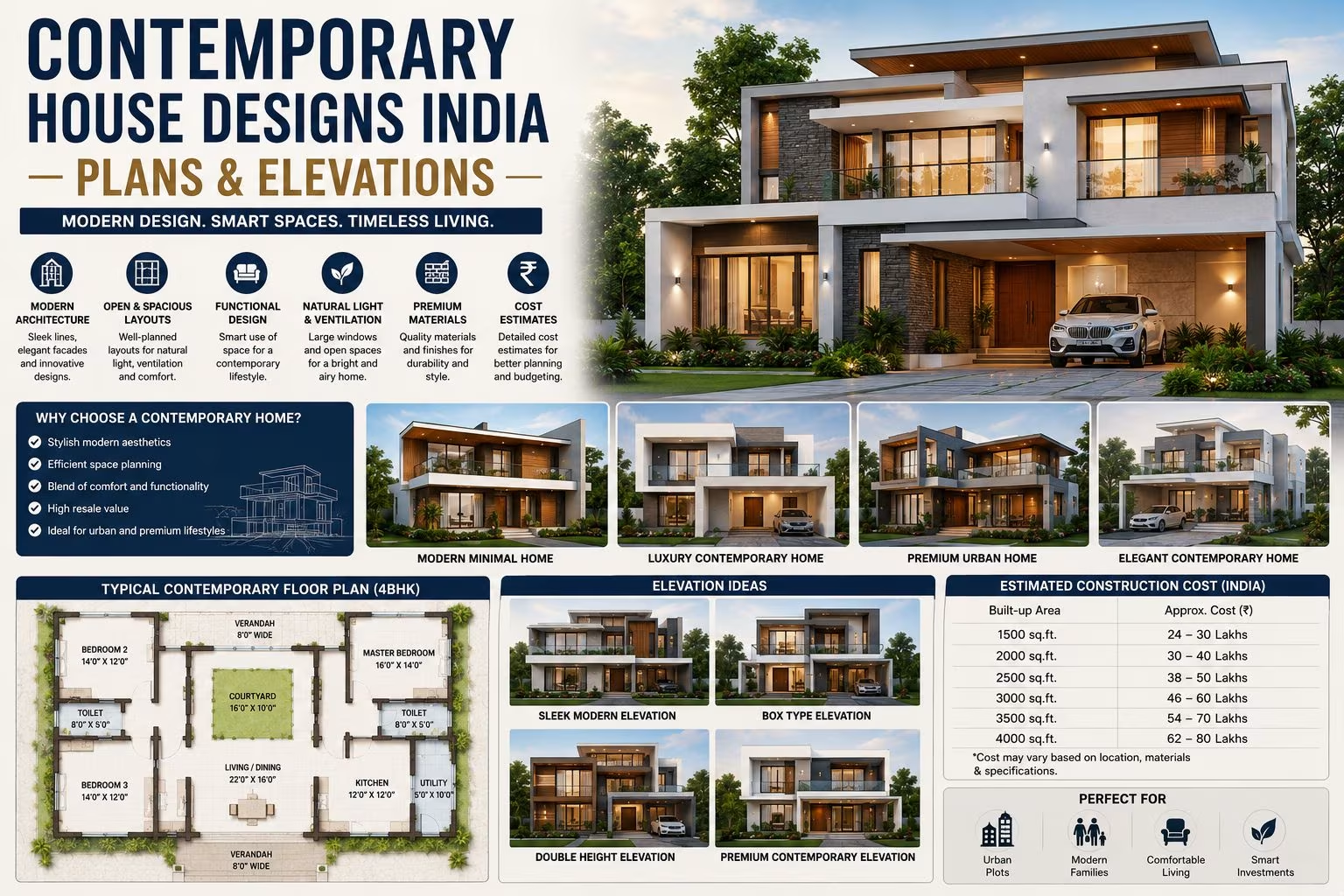
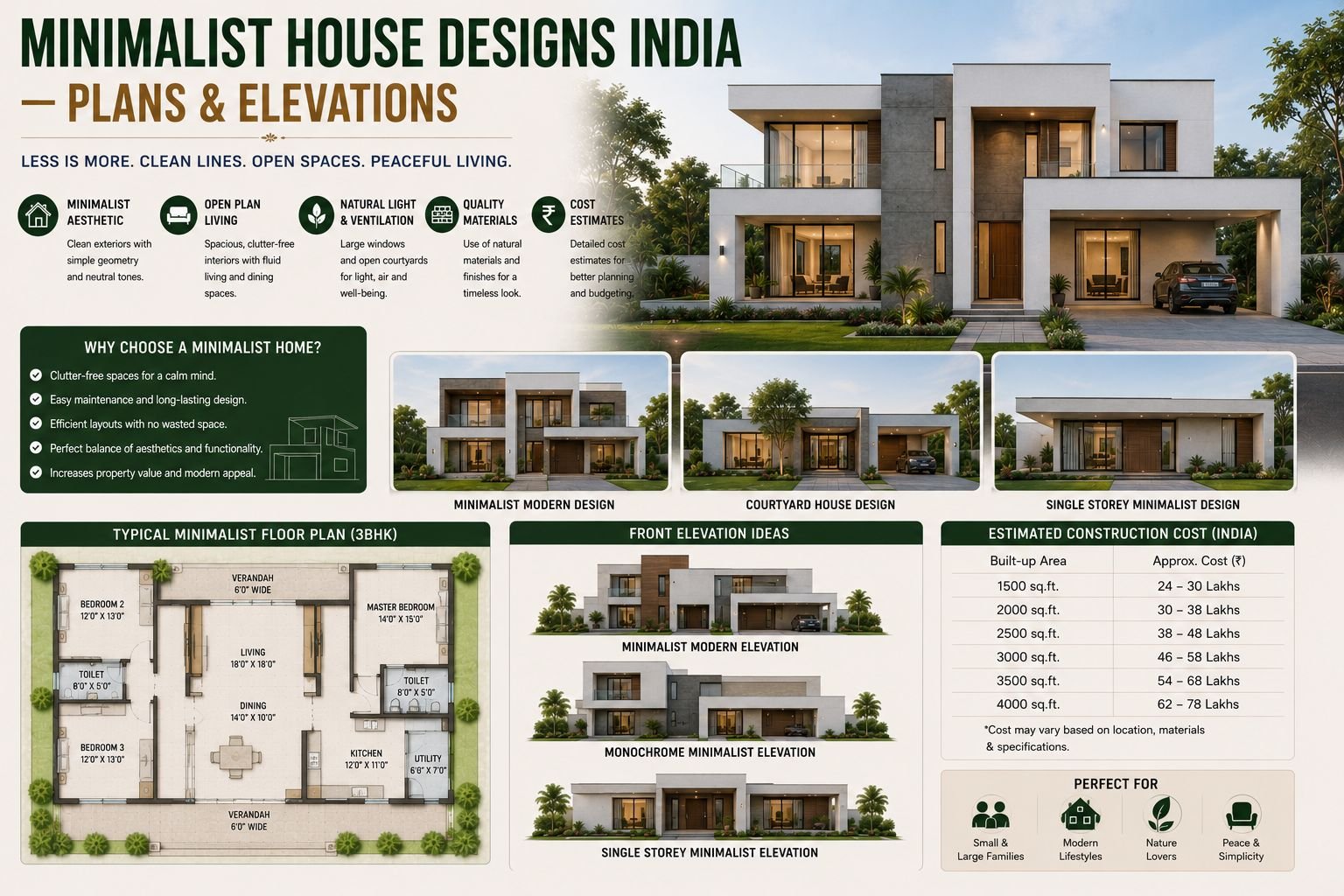
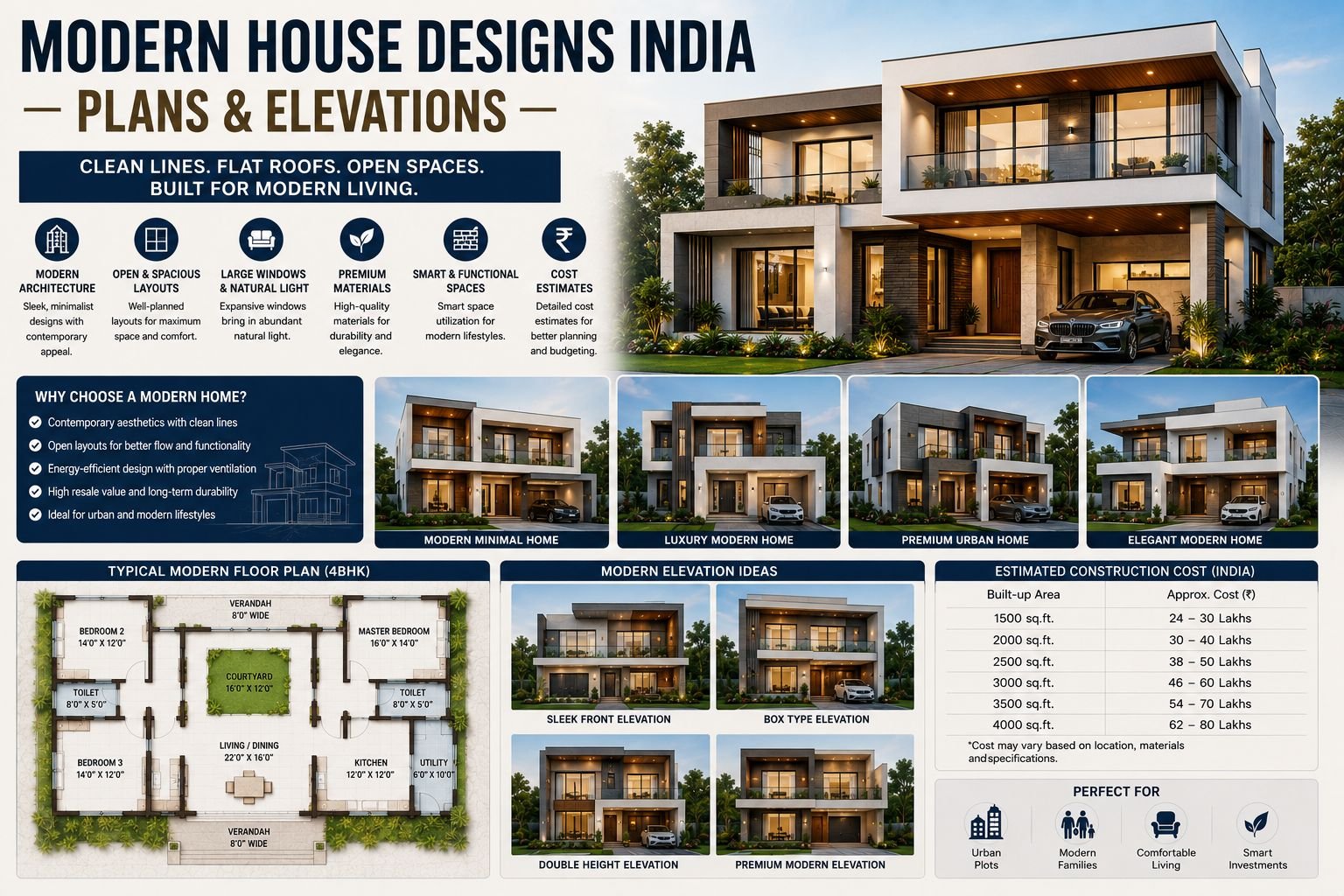
Modern house designs remain the dominant choice for urban India in 2025. Defined by geometric precision, flat or low-pitched roofs, large glazed openings, and a restrained material palette, modern homes prioritise openness, natural light, and clean spatial organisation.
In plan, modern homes typically feature open-plan living and dining areas, straight corridor-free internal circulation, and bedrooms placed for cross-ventilation. In elevation, the language is horizontal lines, cantilevered volumes, stone or ACP cladding accents, and frameless or minimally framed windows.
BuildHQ's modern house design collection spans compact 600 sqft single-floor homes to large 4,000 sqft multi-storey residences, covering narrow urban plots, wide suburban frontages, and corner sites.
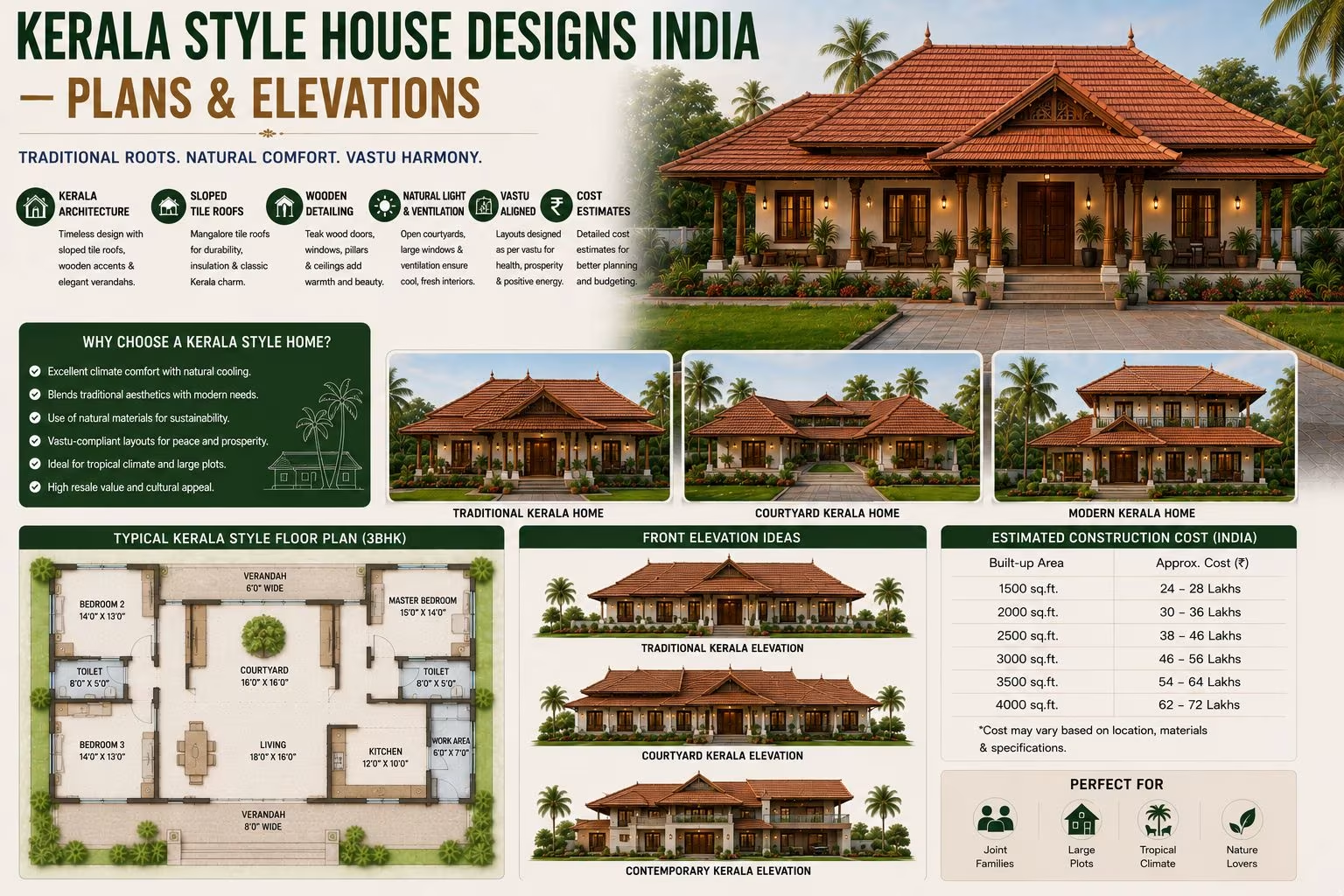
Kerala's residential architecture is among the most climatically intelligent in India. Sloping tiled roofs with generous overhangs, shaded verandahs, internal courtyards, wooden columns, and latticed ventilation elements work together to keep interiors cool and dry in one of India's most rainfall-intensive regions.
Contemporary Kerala designs blend these traditional elements with modern spatial planning — open kitchens, attached bathrooms for all bedrooms, and contemporary bathroom and kitchen fittings — while preserving the architectural character that makes Kerala homes instantly recognisable.
Our Kerala house design collection includes traditional Tharavad-inspired layouts, compact single-floor Kerala homes for smaller plots, and contemporary hybrid designs that retain the sloped roof and wooden accents while adopting a more open modern interior.
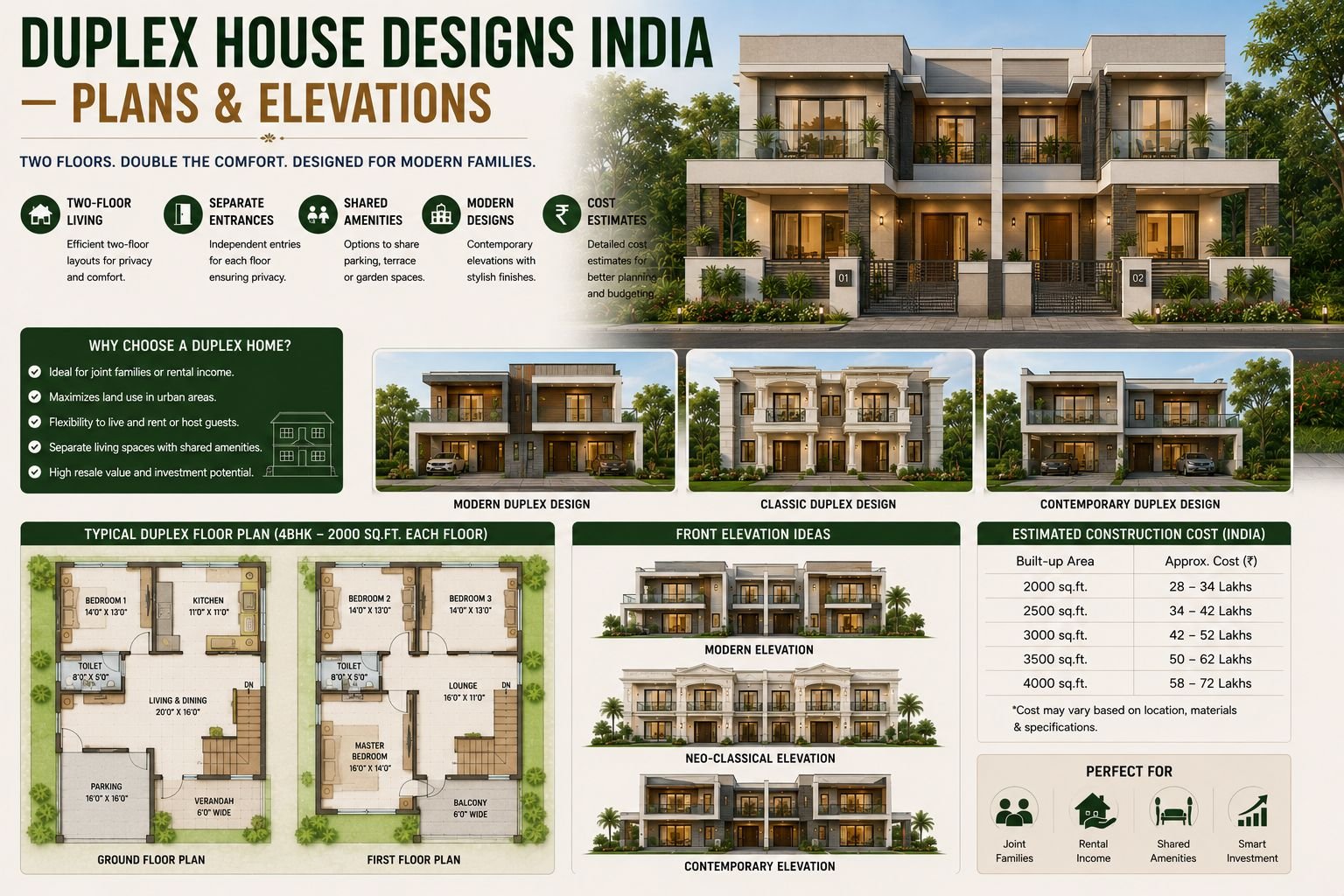
Duplex homes — two independent dwelling units stacked vertically within a single structure — are increasingly popular in urban India as a way to generate rental income, accommodate joint family living across two generational units, or simply maximise the use of a limited plot.
Good duplex design requires careful attention to sound insulation between floors, independent entry points, separate utility connections, and layouts that function well for both units without one feeling inferior to the other. BuildHQ's duplex collection includes designs for plots as narrow as 20 ft and as wide as 50 ft, with a range of elevation styles from modern to traditional.
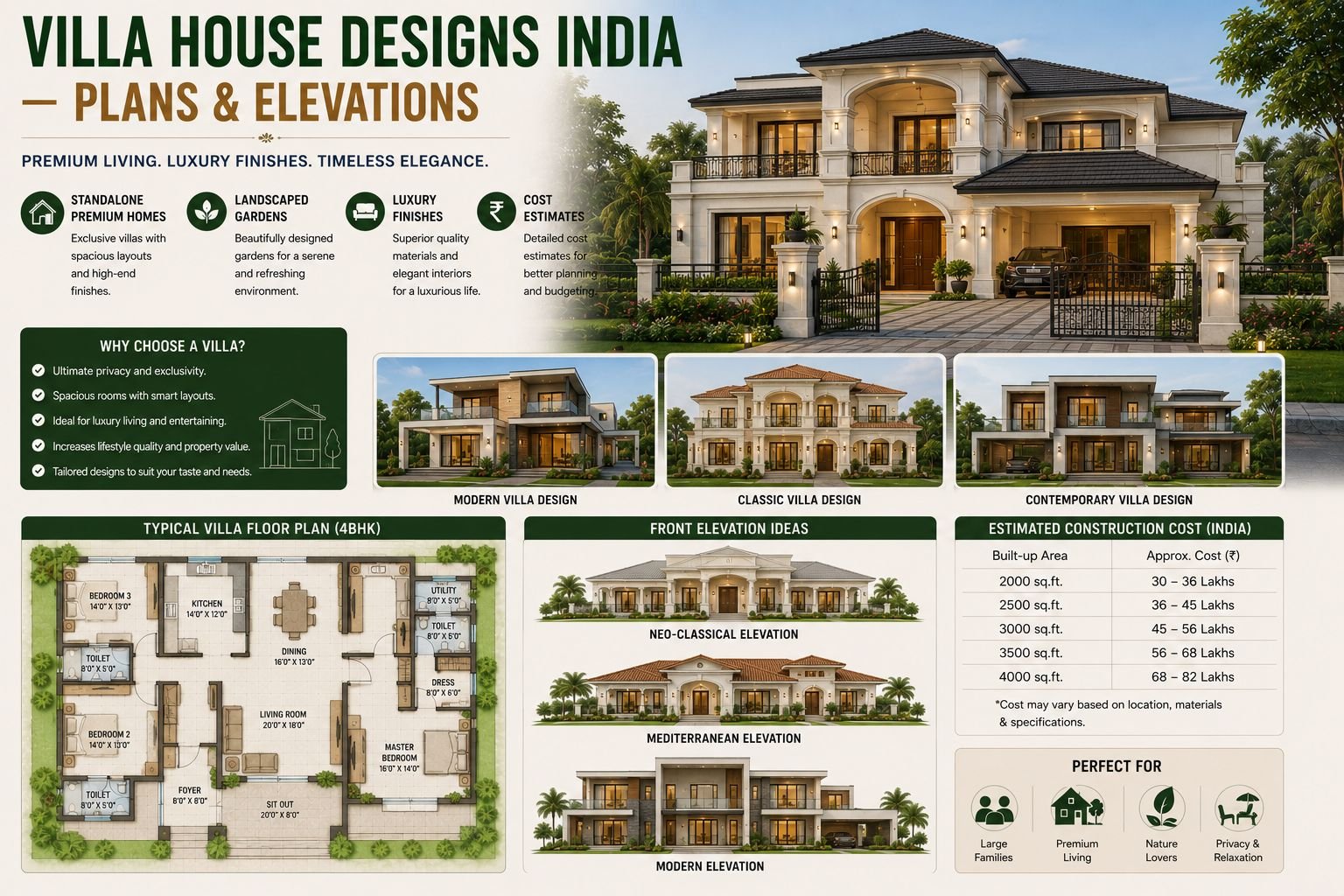
Independent villas on plots above 1,500 sqft represent the aspirational peak of Indian residential construction. Villa designs in the BuildHQ collection draw from tropical modern, Mediterranean, Indo-contemporary, and regional traditional influences — all adapted for Indian site conditions, climate, and material availability.
Villa floor plans in the collection typically include four or more bedrooms, dedicated home office or study spaces, double-height entrance foyers, utility and service areas separated from main living zones, and outdoor spaces integrated with interior living — courtyards, sit-out areas, swimming pool decks, and landscaped gardens.
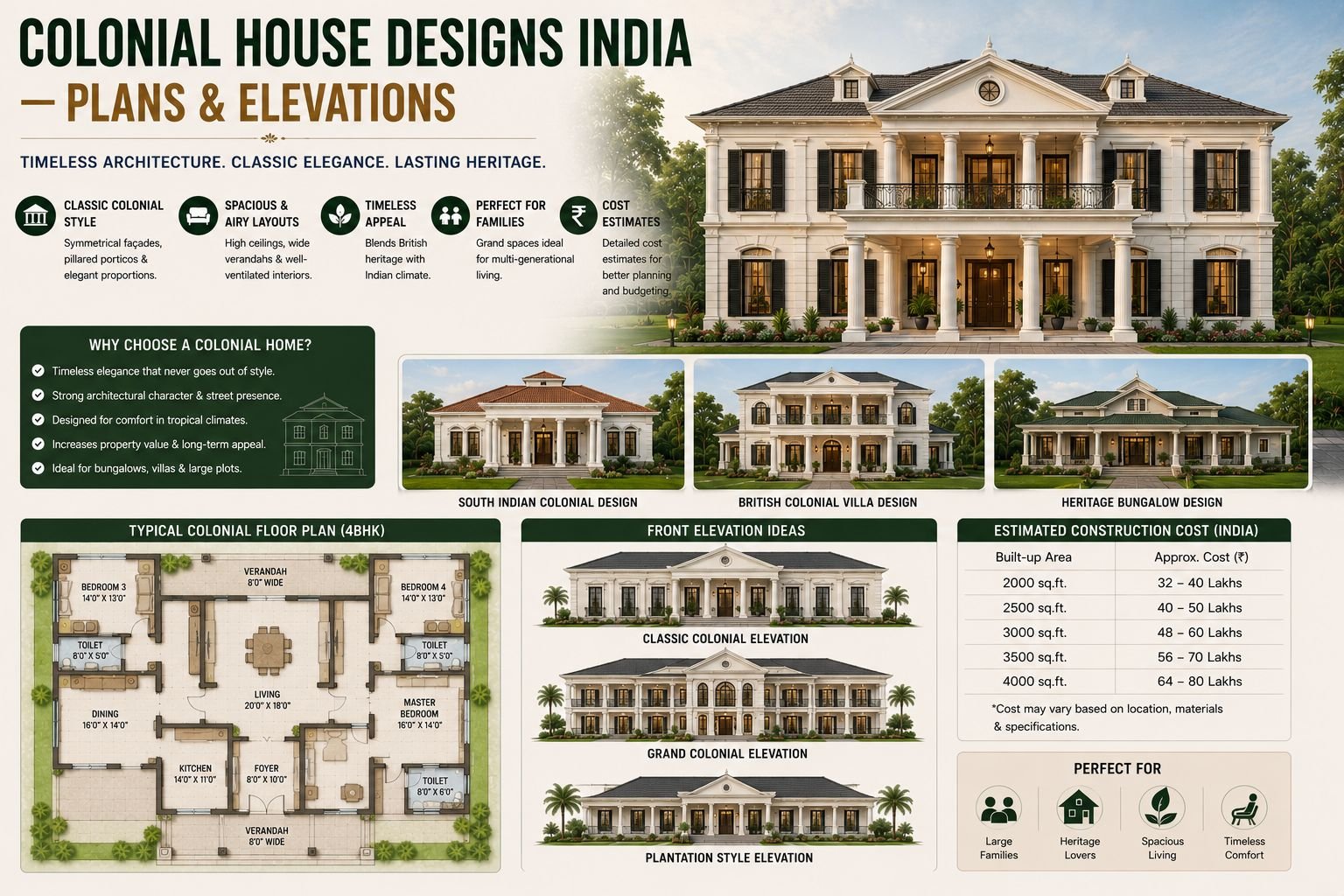
India's colonial architectural heritage has left a lasting influence on residential design, particularly in cities like Chennai, Kolkata, Bengaluru, and Pune. Colonial homes are characterised by symmetrical facades, verandahs with arched or colonnaded frontages, high ceilings, large shuttered windows, and a stately, unhurried proportional quality.
Contemporary Indo-colonial designs preserve the facade language — arches, columns, symmetry, and verandahs — while updating internal planning for modern living. This style is particularly popular among homeowners who want a home with character and gravitas rather than the more clinical quality of strict modernism.
Contemporary design occupies the expressive middle ground between strict modernism and traditional styles. Contemporary homes allow mixed material palettes, curved forms, asymmetrical compositions, and more decorative detailing than pure modern — while remaining rooted in current architectural sensibility rather than historical revival.
In practice, contemporary Indian homes often combine a stone-clad ground floor with a smooth plastered upper floor, introduce wooden or brick accent walls as focal elements, and use varied rooflines to create visual complexity. Floor plans are open and fluid, typically with well-defined public and private zones.
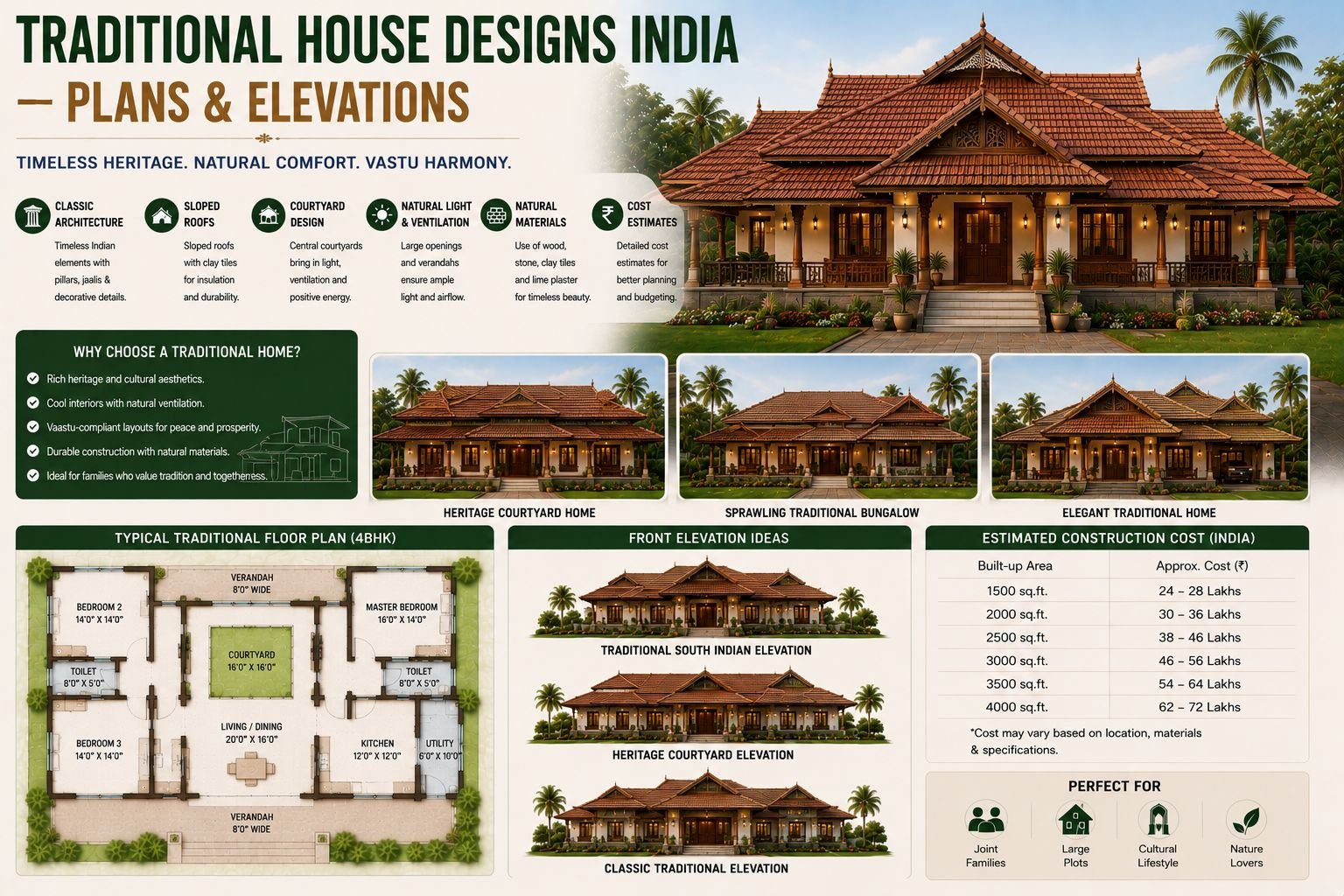
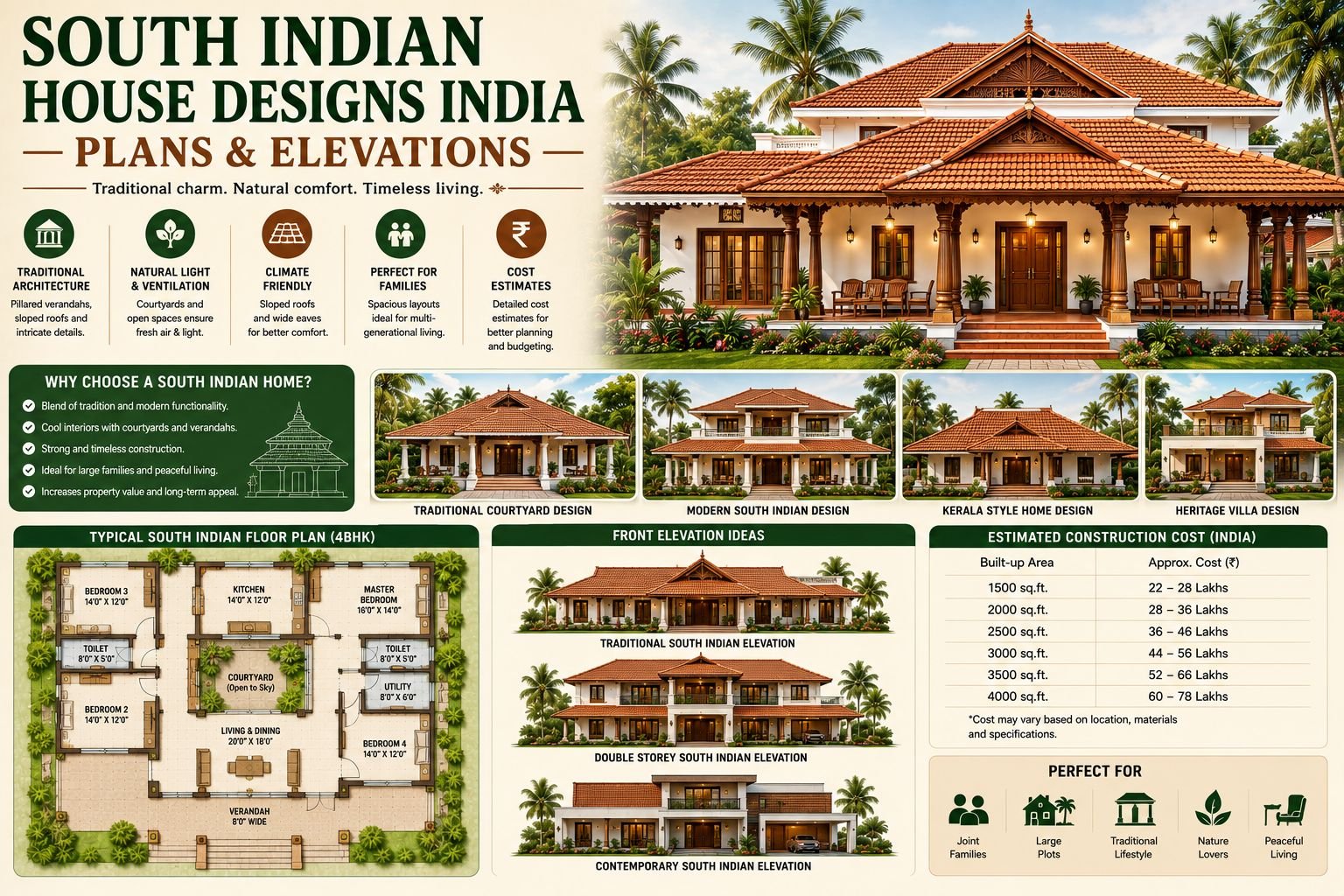
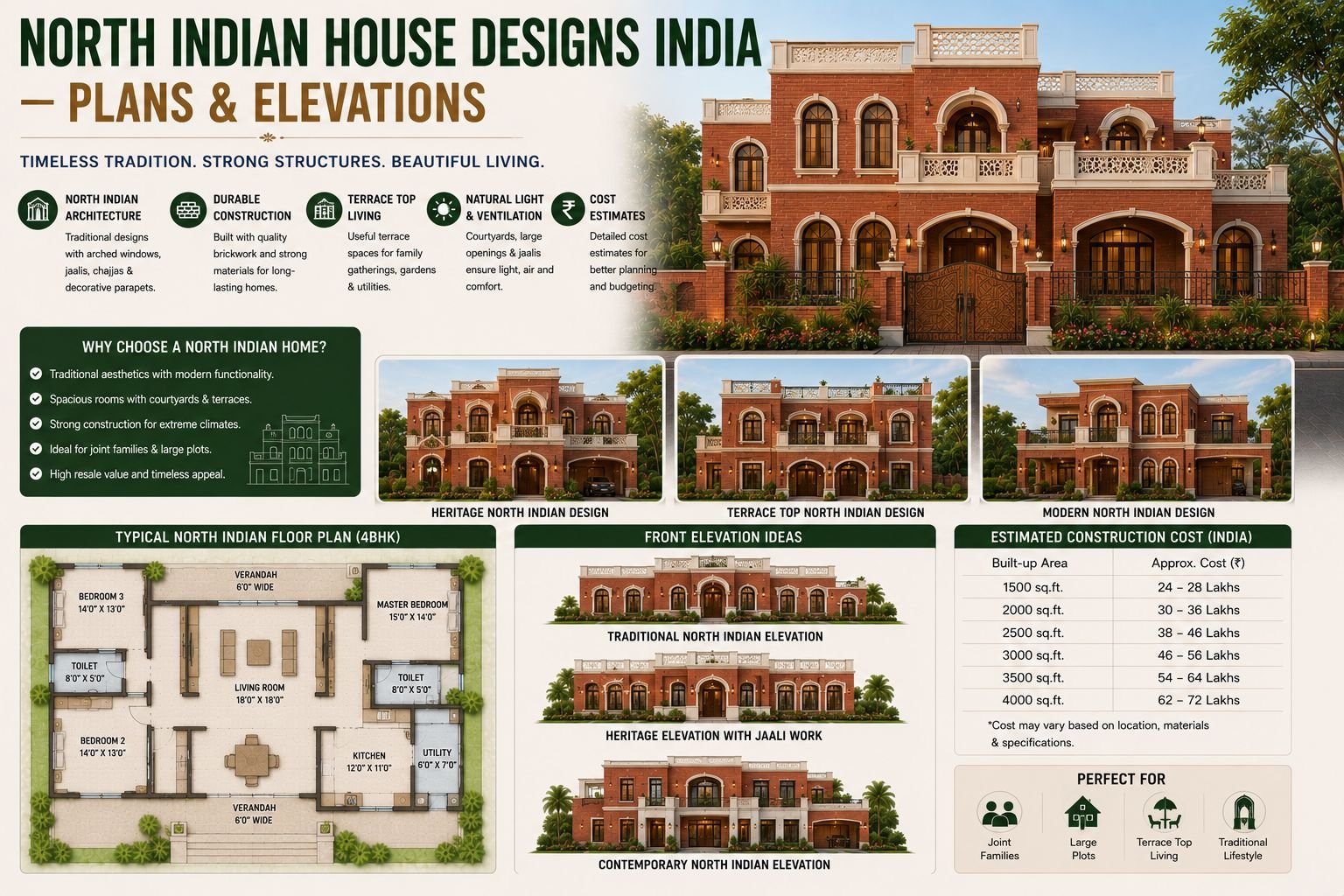
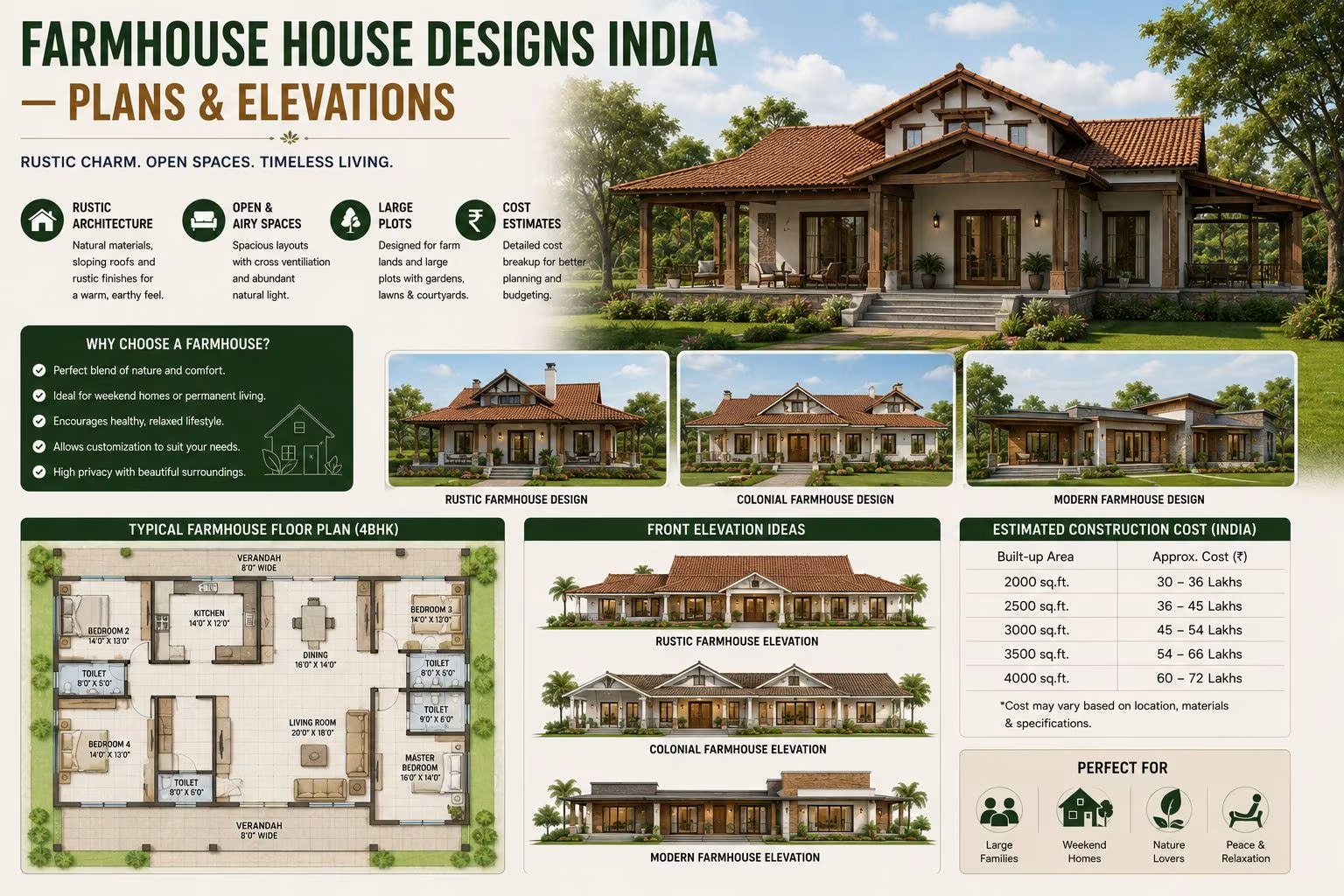
Beyond Kerala and colonial influences, India's residential architectural traditions include Chettinad courtyard homes from Tamil Nadu, Rajasthani havelis, Bengal terracotta-accented houses, Goan Portuguese-influenced residences, and Gujarati stepped-facade homes — each shaped by a distinct regional climate, culture, and building material tradition.
BuildHQ's traditional and regional collection is curated to represent this diversity authentically. Each design in this category is tagged with its regional origin and comes with contextual notes on the climate zone, typical materials, and spatial traditions it draws from.
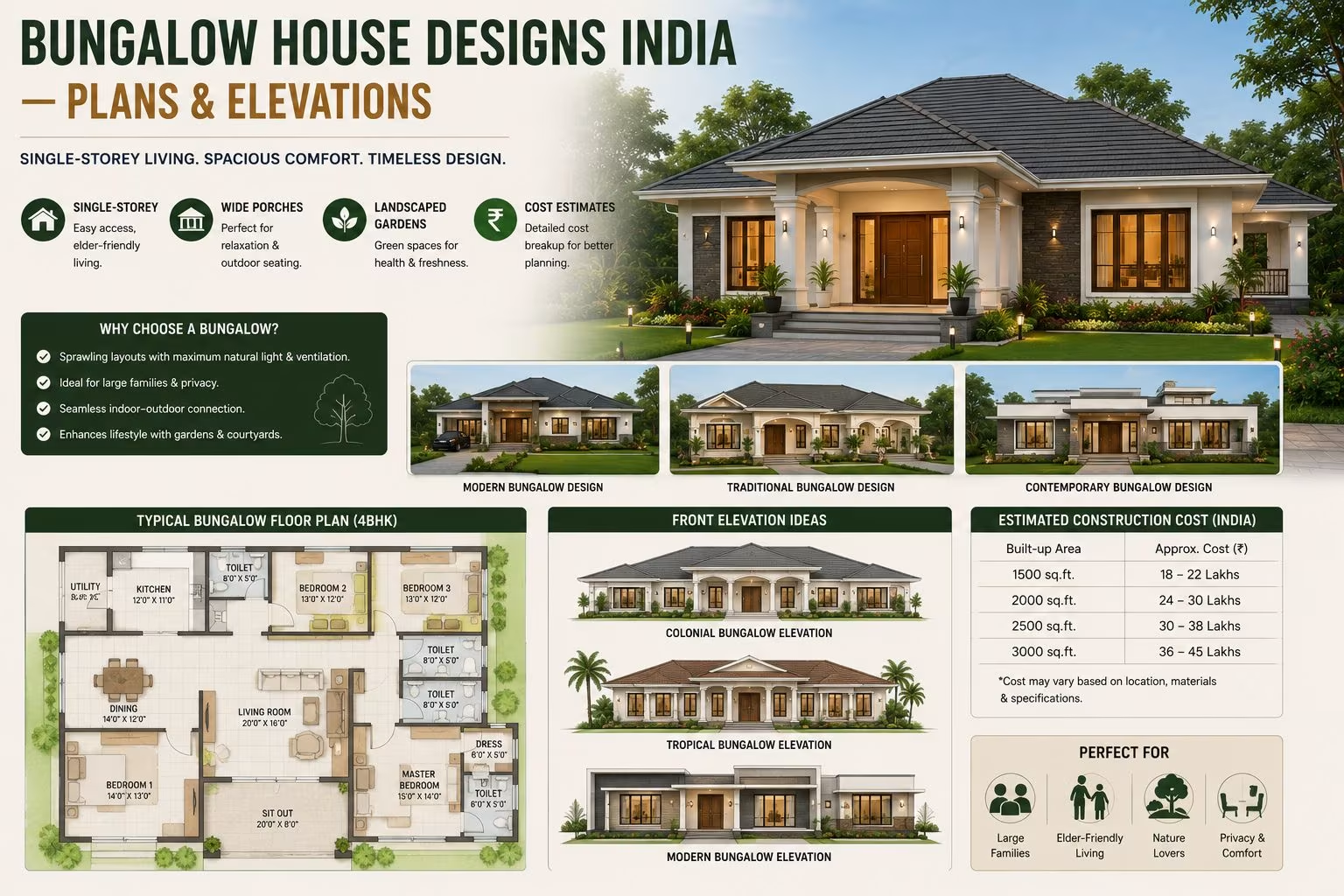
Single-floor homes — whether chosen for accessibility, budget efficiency, or personal preference — require particular design skill to achieve a strong presence without vertical height. Good single-floor designs use roof form, facade texture, material contrast, and landscape integration to create visual interest and a sense of arrival.
In plan, single-floor homes benefit from careful zoning to prevent noise from living areas disturbing sleeping areas, and from cross-ventilation planning that becomes harder to achieve once walls rather than voids separate zones. Our single-floor collection covers plot widths from 20 ft to 60 ft with layouts optimised for families of various sizes.
G+1 construction is the most common residential format across urban India. The BuildHQ double floor collection is the largest in our library, covering virtually every combination of plot width, style, and budget likely to be relevant to an Indian homeowner today.
Each double floor design in the collection includes both ground floor and first floor plans alongside front, side, and rear elevations — giving a complete picture of how the home is organised vertically and how the upper and lower levels relate to each other spatially and structurally.
Three-storey residential construction is growing rapidly in Indian cities as urban land costs rise and families choose to build vertically rather than outward. G+2 designs present the greatest planning complexity — managing staircase placement, cross-ventilation across three levels, structural load distribution, and maintaining liveable proportions on upper floors.
BuildHQ's G+2 collection emphasises designs that solve these challenges well — with efficient staircase cores, good natural light to upper floors, and facade compositions that handle vertical mass gracefully.
Every design in the BuildHQ collection is presented with a consistent set of information to make browsing and comparison straightforward.
Front Elevation Drawing — A scaled front view of the home showing the facade composition, roof form, window and door placements, and material zones.
Floor Plan for Each Level — Dimensioned floor plans for every floor showing room layout, door and window positions, circulation paths, and built-up area breakdown.
Built-Up Area Summary — Total built-up area and a floor-by-floor breakdown so you can immediately assess whether a design is feasible for your plot coverage and FAR limits.
Style and Region Tags — Each design is tagged with its architectural style, suitable region or climate zone, and plot orientation suitability.
Estimated Construction Cost Range — An indicative construction cost range for the design at Basic, Standard, and Premium quality tiers based on current material and labour rates.
Suggested Plot Size — Minimum and ideal plot dimensions for which the design is suited, helping you quickly filter for relevance to your specific site.
Architect Credit — Where a design is contributed by a practising architect on the BuildHQ platform, their name and profile link is included.
Finding relevant designs from a collection of 500+ is only useful if the filtering tools are precise. BuildHQ allows you to narrow the collection by multiple parameters simultaneously.
Architectural Style — Modern, Contemporary, Kerala Traditional, South Indian Traditional, North Indian Traditional, Colonial, Indo-Colonial, Tropical Modern, Mediterranean, Minimalist
Number of Floors — Single floor, G+1, G+2, Duplex, Villa (G+2 or above with large plot)
Plot Width — Below 20 ft, 20–25 ft, 25–30 ft, 30–40 ft, 40–60 ft, Above 60 ft
Plot Facing — North, South, East, West, Corner plot
Bedrooms — 1 BHK, 2 BHK, 3 BHK, 4 BHK, 4+ BHK
Built-Up Area — Below 800 sqft, 800–1,200 sqft, 1,200–1,800 sqft, 1,800–2,500 sqft, 2,500–4,000 sqft, Above 4,000 sqft
Estimated Budget — Below ₹20 lakh, ₹20–₹40 lakh, ₹40–₹80 lakh, ₹80 lakh–₹1.5 crore, Above ₹1.5 crore
Region — South India, North India, West India, East India, Central India, Coastal, Hilly terrain
Special Features — Courtyard, Basement, Terrace garden, Swimming pool, Home office, Vastu compliant, Accessible design, Joint family layout
Combining filters produces a precisely relevant subset of the full collection — allowing a homeowner with, for example, a 30 ft east-facing plot in South India looking for a 3 BHK modern G+1 home within a ₹50 lakh budget to see only the designs that genuinely match their situation.
Browsing designs is the enjoyable part. Translating a design you love into a home that works for your site, family, and budget requires a few grounding considerations.
A significant proportion of Indian homeowners incorporate Vastu principles into their house planning. Room orientation, entrance direction, kitchen and bathroom placement, and staircase location all have Vastu implications that interact with design decisions. BuildHQ's collection includes a dedicated Vastu-compliant filter, and designs tagged as Vastu-friendly have been reviewed against standard Vastu guidelines by qualified practitioners.
Indian joint family living has specific spatial requirements that standard Western design templates don't address — a ground floor bedroom and attached bathroom for elderly parents, a semi-private zone for the main family, separate informal sitting areas for different generations, and often a large kitchen capable of supporting cooking for 8–12 people. BuildHQ's joint family design filter specifically surfaces plans that address these needs.
Many Indian homeowners build in phases — a single floor now with the structural provision to add a floor later. Designs in the BuildHQ collection that are structurally compatible with future additional floors are tagged accordingly, with notes on what the foundation and column design allows.
Every Indian city has regulations governing the maximum percentage of a plot that can be covered by a building footprint and the maximum total built-up area relative to the plot area. Always verify that a design you're interested in is compliant with your local authority's regulations before commissioning working drawings based on it.
A design created for a dry North Indian climate may need significant adaptation for use in humid coastal Kerala or the cold Himalayan foothills. Wall thickness, roof design, window-to-wall ratios, shading provision, and ventilation strategy all need adjustment when a design is transplanted across climate zones. BuildHQ's climate zone tag helps you identify which designs were conceived for conditions similar to your site.
The BuildHQ house design collection is the beginning of a larger resource ecosystem designed to support Indian homeowners through every stage of the construction journey.
Design Inspiration — Browse 500+ designs filtered to your exact requirements to develop a clear brief and visual vocabulary before engaging an architect.
Architect Engagement — Use BuildHQ's verified architect panel to commission working drawings, 3D renders, and construction documentation based on your chosen design direction. Packages are available at Basic, Standard, and Premium levels.
Material Price Tracking — Once your design is established, use BuildHQ's material price pages to track current rates for cement, steel, bricks, sand, and finishing materials across your city.
Construction Cost Estimation — BuildHQ's per sqft construction cost guides help you build a realistic project budget aligned to your design complexity and quality tier.
Supplier Discovery — Find verified material suppliers, contractors, and specialists in your city through the BuildHQ supplier directory.
Can I use a design from the BuildHQ collection directly for construction? Designs in the collection serve as inspiration and reference. For actual construction, a licensed architect must prepare site-specific working drawings, structural designs, and documentation tailored to your plot dimensions, orientation, soil conditions, and local building regulations.
How do I know if a design will fit my plot? Each design includes a suggested minimum and ideal plot size. Use the plot width and area filters to browse only designs suited to your specific plot. Your architect can further advise on adaptation feasibility.
Are the designs in the collection available for customisation? Yes. Where a design is contributed by an architect on the BuildHQ platform, you can directly engage that architect for a customised version. For other designs in the collection, BuildHQ's architect panel can develop a similar design tailored to your requirements.
Do the floor plans shown follow Vastu guidelines? Designs tagged as Vastu-compliant in the collection have been reviewed against standard Vastu guidelines. Other designs in the collection are not necessarily Vastu-compliant. If Vastu compliance is important to you, use the dedicated filter or ask your architect to review and adapt the layout accordingly.
How often is the collection updated? New designs are added to the BuildHQ collection regularly, contributed by practising architects from across India. The collection is reviewed periodically to remove outdated designs and ensure quality standards are maintained.
Can I save and share designs from the collection? Yes. Registered BuildHQ users can save designs to a personal project folder, create mood boards, and share collections with family members or architects via a shareable link.
Five hundred designs. Every major style. Every floor count. Every plot size. Filtered to match your specific situation and ready to inspire the most important building project of your life.
Browse the BuildHQ house design collection, save the ones that speak to you, and take that shortlist to your architect — or let BuildHQ connect you with a verified architect who can bring your chosen direction to life.
Build with clarity. Build with confidence. Build with BuildHQ.