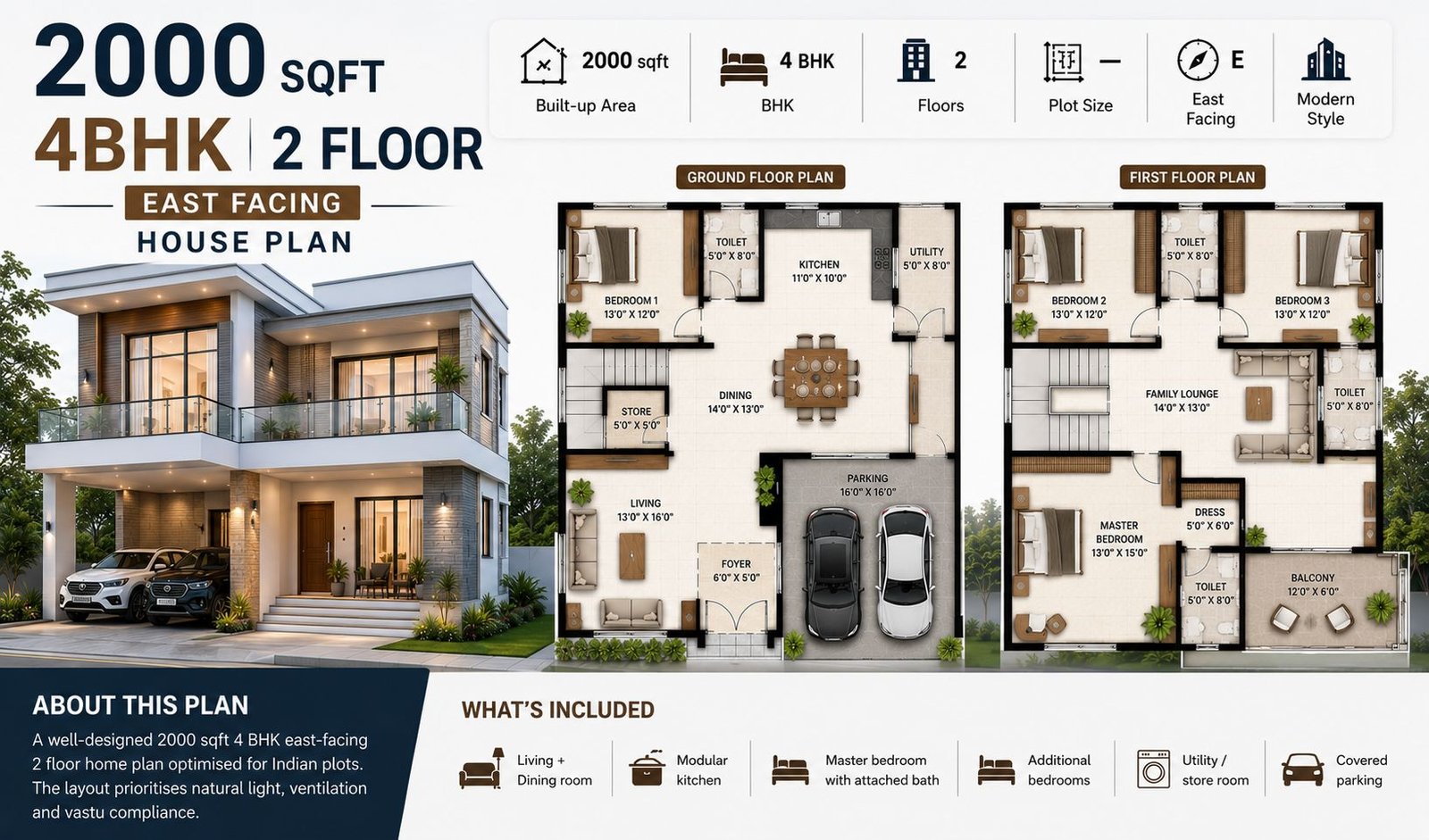
About This Plan
A well-designed 2000 sqft 4 BHK home plan optimised for Indian plots. The layout prioritises natural light, ventilation and vastu compliance.
What's Included
- Living + Dining room
- Modular kitchen
- Master bedroom with attached bath
- Additional bedrooms
- Utility / store room
- Covered parking
2000 Sq Ft 4 BHK House Plan: 2-Floor East-Facing Modern Home Design
A 2000 sqft 4BHK 2 floor house plan is an ideal choice for Indian families looking for a spacious yet practical home layout. By distributing the built-up area across two floors, homeowners can enjoy comfortable room sizes, better privacy, and efficient space utilization without requiring a very large plot. This configuration is particularly suitable for families who need multiple bedrooms while maintaining open and functional common areas.
The east-facing orientation adds further value by allowing natural morning sunlight to enter the home, creating bright and welcoming interiors. Combined with modern architectural design and smart planning, this 2000 sqft 4BHK house plan offers a perfect balance of comfort, aesthetics, and everyday functionality.
Why Choose a 2000 Sqft 4BHK 2 Floor House Plan
A 2000 sqft home provides sufficient space for a family while remaining cost-effective to build and maintain. The two-floor arrangement helps separate private and common spaces, making daily living more organized and comfortable.
Benefits include:
- Four well-planned bedrooms
- Efficient use of available plot area
- Better privacy for family members
- Spacious living and dining spaces
- Suitable for growing families
- Dedicated guest accommodation
- Improved ventilation and daylight
- Modern and practical layout
About This Plan
This 2000 sqft 4BHK home plan is designed to maximize comfort while making efficient use of every square foot. The layout focuses on creating open and functional living spaces while ensuring each bedroom receives adequate privacy and ventilation. It is suitable for various plot dimensions and can be customized according to individual family requirements.
The east-facing design helps improve natural lighting during the morning hours and supports a healthier indoor environment. Modern planning principles ensure that the home feels spacious, organized, and comfortable for long-term living.
Floor-Wise Layout Breakdown
The house is divided across two floors to provide a balanced mix of family gathering spaces and private living areas. This arrangement helps improve functionality while maintaining a comfortable flow throughout the home.
Ground Floor
The ground floor serves as the primary activity zone and contains most of the common living spaces. It is designed to provide easy access for residents and guests while supporting daily family activities.
Living Room
The living room is the central social space where family members can relax and guests can be entertained. Large windows and an open layout help create a bright and welcoming environment. The room is designed to accommodate comfortable seating arrangements while maintaining good circulation space.
Dining Area
Located adjacent to the living room and kitchen, the dining area creates a natural connection between family spaces. It provides a dedicated area for meals while maintaining easy access to other parts of the house. Proper lighting and ventilation help make the space comfortable for everyday use.
Modular Kitchen
The modular kitchen is designed for convenience, storage, and efficient workflow. Smart cabinet layouts, ample countertop space, and organized work zones help simplify cooking and meal preparation. An attached utility area can further enhance functionality by providing additional storage and service space.
Ground Floor Bedroom
One bedroom is typically located on the ground floor to provide easy accessibility for elderly family members or guests. This room offers flexibility and can also be used as a home office, study room, or multi-purpose space depending on family requirements.
Common Bathroom
A conveniently located common bathroom serves both residents and visitors on the ground floor. Its placement ensures accessibility without affecting privacy within the living areas.
Covered Parking
Covered parking adds convenience and protects vehicles from weather conditions such as sunlight, rain, and dust. It also improves the overall functionality and value of the property while keeping the exterior organized.
First Floor Layout
The first floor is generally dedicated to private family spaces, providing a quieter and more comfortable environment. Bedrooms, balconies, and additional family areas are usually located on this level.
Master Bedroom with Attached Bathroom
The master bedroom is designed as a comfortable private retreat for homeowners. It typically includes an attached bathroom, wardrobe space, and large windows for natural light and ventilation. In many layouts, the room also features access to a balcony for additional comfort.
Additional Bedrooms
The remaining bedrooms provide ample space for children, family members, or guests. Each room is planned to accommodate essential furniture while maintaining comfortable movement space. Proper ventilation and natural lighting help create a pleasant living environment.
Family Lounge
A family lounge provides an additional relaxation space where family members can spend time together, watch television, or engage in leisure activities. This separate gathering area helps reduce congestion in the main living room downstairs.
Balcony
Balconies contribute to both the appearance and functionality of the home. They provide outdoor seating areas, improve airflow, and allow additional natural light to enter adjoining rooms. A well-designed balcony also enhances the overall elevation of the house.
Additional Bathrooms
Bathrooms on the first floor are positioned to provide convenient access from bedrooms. Modern planning ensures efficient plumbing layouts while maintaining privacy and comfort for family members.
Advantages of an East-Facing House
East-facing homes remain one of the most preferred options among Indian homeowners due to their practical and traditional benefits.
Natural Morning Sunlight
East-facing homes receive pleasant morning sunlight that helps brighten interiors naturally. This creates a healthier and more cheerful living environment while reducing the need for artificial lighting during the day.
Better Ventilation
Proper orientation supports natural airflow throughout the house, helping maintain indoor comfort during different seasons. Good ventilation also contributes to improved air quality inside the home.
Vastu-Friendly Planning
Many homeowners prefer east-facing homes because they align well with traditional Vastu principles. This orientation is often considered favorable for creating positive and balanced living spaces.
Energy Efficiency
By maximizing daylight and natural airflow, east-facing homes can help reduce energy consumption associated with lighting and cooling systems.
Design Considerations
Careful planning helps ensure that a 2000 sqft 4BHK home remains comfortable, practical, and visually appealing throughout its lifespan.
Staircase Placement
The staircase should be positioned to provide easy movement between floors while minimizing wasted space. A centrally located staircase often improves overall accessibility and layout efficiency.
Cross Ventilation
Proper placement of doors, windows, and openings is essential for maintaining airflow throughout the home. Effective cross-ventilation improves indoor comfort and reduces reliance on artificial cooling.
Storage Planning
Built-in storage solutions help maximize usable floor space while keeping the home organized. Utility rooms, wardrobes, and dedicated storage areas contribute to better functionality.
Future Flexibility
The layout should allow for changing family needs over time. Extra rooms can be adapted as study spaces, home offices, hobby rooms, or guest accommodations when required.
Benefits of Planning with BuildHQ
Better House Planning
BuildHQ helps homeowners understand room layouts, space utilization, and design possibilities before construction begins. Proper planning leads to better outcomes and fewer costly changes during construction.
Smarter Budgeting
Understanding construction requirements and material considerations early helps homeowners create realistic budgets and manage costs effectively.
Practical Design Guidance
Our resources focus on functional layouts that suit Indian families, local building conditions, and modern lifestyle requirements. This ensures a balance between aesthetics and practicality.
Informed Decision Making
Access to planning insights, construction information, and layout ideas helps homeowners make confident decisions throughout the building process.
Build Your 2000 Sqft 4BHK Dream Home with BuildHQ
A 2000 sqft 4BHK 2 floor east-facing house plan offers the perfect combination of comfort, functionality, and modern design. With spacious bedrooms, practical common areas, covered parking, and thoughtful room distribution, it provides everything a modern family needs for comfortable living.
Whether you're building your first home or upgrading to a larger residence, this layout offers long-term flexibility and excellent value. BuildHQ helps you explore house plans, construction guidance, and planning resources to make your dream home a reality.
Frequently Asked Questions
What is included in this 2000 sqft 4BHK 2 floor house plan? This house plan typically includes four bedrooms, a spacious living room, dining area, modular kitchen, multiple bathrooms, utility space, balconies, and covered parking. The layout is carefully designed to balance private and common areas while ensuring comfort for every family member. Additional features such as a family lounge and storage areas may also be included.
Is a 2000 sqft 4BHK house suitable for a family of six? Yes, a 2000 sqft 4BHK house provides sufficient space for a family of six or more. Four bedrooms allow comfortable accommodation for parents, children, and elderly family members while maintaining privacy. The spacious common areas also support comfortable day-to-day living.
Why is an east-facing house considered beneficial? East-facing homes receive natural morning sunlight, which helps create bright and healthy interiors. Many homeowners also prefer east-facing layouts because they align with Vastu principles and support better ventilation. This combination makes them one of the most popular choices in residential construction.
How are the bedrooms distributed in a 2-floor 4BHK layout? Most 2-floor 4BHK layouts include one bedroom on the ground floor and three bedrooms on the first floor. This arrangement improves accessibility for guests or elderly family members while keeping private family spaces separate. The master bedroom is usually located upstairs with an attached bathroom.
Does this house plan include covered parking? Yes, covered parking is included as part of the design. It helps protect vehicles from weather conditions while improving convenience and property functionality. Depending on plot size, the parking area may accommodate one or multiple vehicles.
Can the floor plan be customized according to plot dimensions? Yes, this house plan can be customized to suit different plot sizes and local building regulations. Room dimensions, balcony locations, utility spaces, and parking arrangements can all be adjusted based on individual requirements while maintaining overall functionality.
Is this house plan Vastu compliant? The east-facing orientation makes this plan suitable for Vastu-based customization. The positioning of entrances, bedrooms, kitchens, and staircases can be adjusted according to Vastu preferences without affecting modern design principles.
Can one of the bedrooms be converted into a home office? Yes, one of the bedrooms can easily function as a home office, study room, or hobby space. This flexibility is particularly useful for professionals working remotely or families requiring dedicated learning areas for children.
Our architects will adapt this plan to your exact plot and requirements.