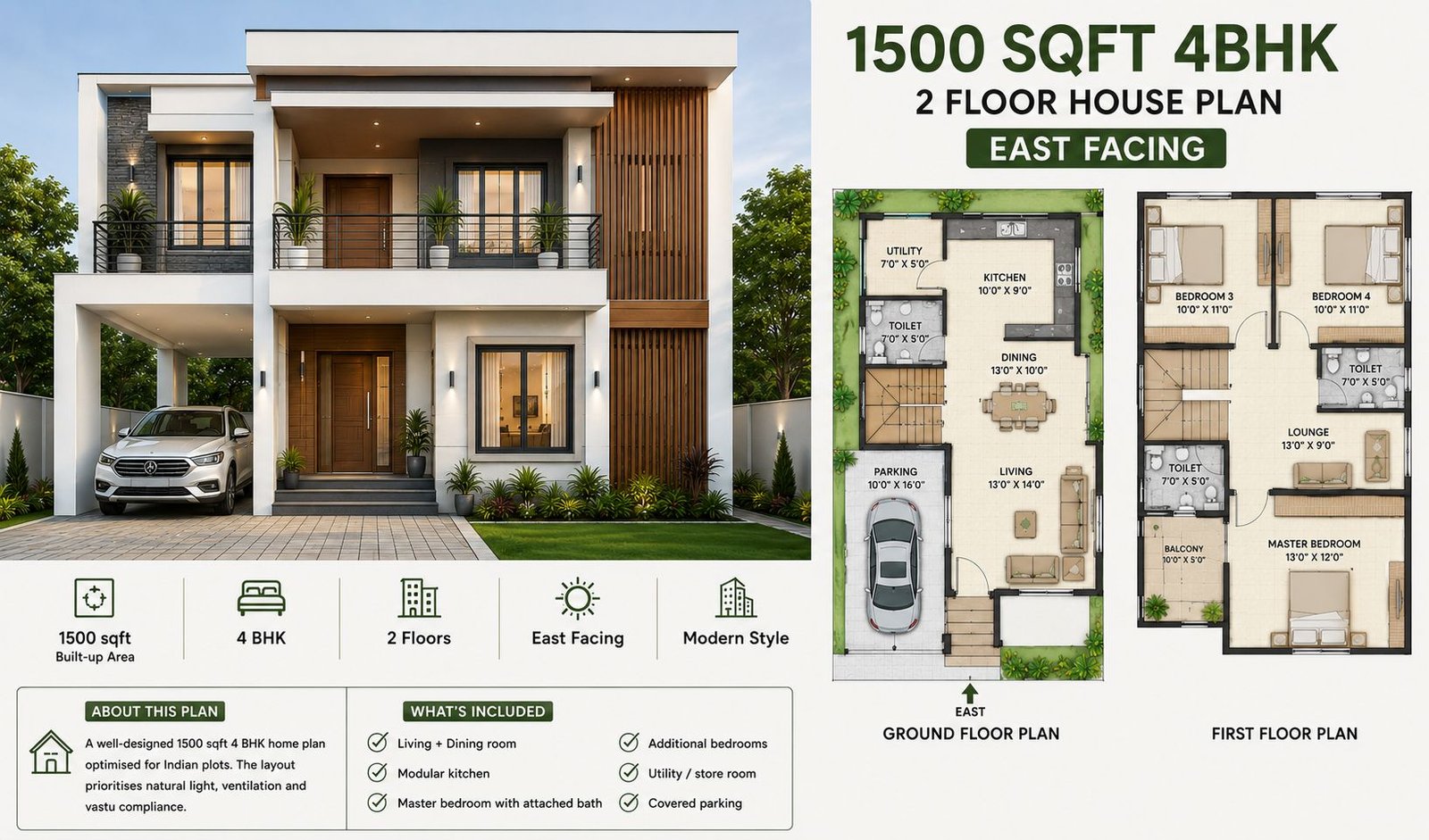
About This Plan
A well-designed 1500 sqft 4 BHK home plan optimised for Indian plots. The layout prioritises natural light, ventilation and vastu compliance.
What's Included
- Living + Dining room
- Modular kitchen
- Master bedroom with attached bath
- Additional bedrooms
- Utility / store room
- Covered parking
1500 Sq Ft 4 BHK House Plan: 2-Floor East-Facing Modern Design
A 1500 sqft 4BHK 2 floor house plan is an excellent solution for Indian families looking to maximize living space on a compact plot. Through smart architectural planning and efficient room distribution, this layout accommodates four bedrooms, functional living spaces, and essential amenities within a manageable built-up area. The two-floor configuration helps create a clear distinction between common and private spaces while making the most of the available square footage.
The east-facing orientation enhances the overall appeal of the home by allowing natural morning sunlight to brighten the interiors. Combined with modern design principles, efficient space planning, and Vastu-friendly considerations, this house plan offers a comfortable and practical living environment for modern families.
Why Choose a 1500 Sqft 4BHK 2 Floor House Plan
A well-designed 1500 sqft 4BHK home provides the functionality of a larger house while keeping construction and maintenance costs under control. By utilizing two floors effectively, homeowners can enjoy four bedrooms and comfortable living areas without requiring a large plot.
Benefits include:
- Four functional bedrooms
- Efficient use of available space
- Comfortable family living areas
- Suitable for growing families
- Better privacy through floor separation
- Modern and practical design
- Improved ventilation and daylight
- Cost-effective construction solution
About This Plan
This 1500 sqft 4BHK house plan is designed to optimize every square foot while maintaining comfort and usability. The layout focuses on efficient room placement, smooth circulation, and practical daily living requirements. Despite the compact built-up area, the design ensures that every room feels functional and well-connected.
The east-facing design allows natural light to enter the home during the morning hours, creating bright and inviting interiors. Proper ventilation and thoughtful room planning further enhance comfort and energy efficiency throughout the year.
Floor-Wise Layout Breakdown
The house is divided across two floors to maximize functionality and create a balanced living environment. Common spaces are positioned for convenience, while private areas are designed to provide comfort and privacy.
Ground Floor
The ground floor serves as the primary family activity zone and includes the most frequently used spaces within the home. It is designed for convenience, accessibility, and efficient day-to-day living.
Living Room: The living room acts as the central gathering space where family members can relax and guests can be entertained. An open layout and proper window placement help create a bright and welcoming atmosphere. The room is designed to feel spacious despite the compact overall footprint of the house.
Dining Area: The dining area is strategically positioned between the living room and kitchen to create a smooth flow between spaces. It provides a comfortable setting for family meals and social interactions while maintaining easy accessibility from different parts of the house.
Modular Kitchen: A modern modular kitchen helps maximize storage and functionality within a compact footprint. Efficient cabinet layouts, countertop space, and organized work zones make daily cooking activities more convenient. An adjoining utility area can further improve practicality and storage capacity.
Ground Floor Bedroom: One bedroom is typically located on the ground floor to accommodate elderly family members or guests. This arrangement improves accessibility and flexibility while ensuring that the home remains suitable for changing family needs over time.
Common Bathroom: A common bathroom on the ground floor provides convenience for residents and visitors alike. Its location is planned to ensure accessibility while maintaining privacy for the main living spaces.
Covered Parking: Covered parking protects vehicles from sunlight, rain, and dust while improving the overall functionality of the property. It also contributes to a cleaner and more organized exterior appearance.
First Floor Layout
The first floor is primarily dedicated to private family spaces. It provides a quieter and more personal environment while accommodating the remaining bedrooms and family-oriented features.
Master Bedroom with Attached Bathroom: The master bedroom is designed to provide comfort, privacy, and convenience. It typically includes an attached bathroom, wardrobe space, and adequate natural lighting. Thoughtful planning ensures the room remains comfortable despite the compact overall size of the house.
Additional Bedrooms: The remaining bedrooms provide flexible accommodation for children, family members, or guests. These rooms are carefully planned to maximize functionality while maintaining comfortable living conditions and adequate storage opportunities.
Family Lounge: A family lounge offers an additional shared space where family members can relax, watch television, or spend time together. This feature helps create a more flexible living environment while reducing dependence on the main living room downstairs.
Balcony: Balconies improve the overall appearance and functionality of the house. They provide outdoor space for relaxation while helping improve ventilation and natural light within adjacent rooms.
Additional Bathroom: The first-floor bathroom is positioned to serve the bedrooms efficiently. Modern planning ensures convenient access while optimizing plumbing layouts and overall space utilization.
Advantages of an East-Facing House
East-facing homes remain highly preferred by Indian homeowners due to their combination of practical and traditional benefits.
Natural Morning Sunlight
An east-facing orientation allows the home to receive direct morning sunlight, helping create bright and cheerful interiors. Natural light improves indoor comfort and reduces the need for artificial lighting during the daytime.
Better Ventilation
Proper orientation supports improved airflow throughout the home. Good ventilation contributes to healthier indoor conditions and helps maintain comfortable temperatures across seasons.
Vastu-Friendly Planning
Many homeowners prefer east-facing homes because they align with traditional Vastu recommendations. This orientation is often associated with positive energy and balanced living spaces.
Energy Efficiency
The combination of daylight and natural airflow can help reduce electricity consumption related to lighting and cooling. This contributes to improved energy efficiency and lower operating costs.
Design Considerations
Careful planning is essential when designing a compact 4BHK home. Efficient use of space helps ensure that every room remains functional and comfortable.
Space Optimization
Since four bedrooms are accommodated within 1500 sqft, efficient space utilization is critical. Smart layouts and practical room dimensions help maximize usability without making spaces feel crowded.
Staircase Placement
The staircase should be positioned strategically to provide convenient access between floors while minimizing wasted floor area. Compact staircase designs often work best for this type of layout.
Cross Ventilation
Proper placement of windows and openings encourages natural airflow throughout the house. Effective ventilation improves indoor comfort and supports a healthier living environment.
Storage Planning
Built-in wardrobes, utility spaces, and storage solutions help keep the home organized. Good storage planning is especially important in compact house designs where every square foot matters.
Benefits of Planning with BuildHQ
Practical Layout Solutions
BuildHQ helps homeowners understand how to maximize functionality within available space. Efficient layouts ensure better comfort and usability for everyday living.
Better Construction Planning
Proper planning before construction begins can help avoid costly modifications later. Understanding layout requirements early improves project efficiency and execution.
Budget-Conscious Design Guidance
Our resources help homeowners make informed decisions regarding layouts, materials, and construction priorities. This supports effective cost management throughout the project.
Reliable Home Building Information
BuildHQ provides practical insights related to house planning, budgeting, construction materials, and design trends. These resources help homeowners make confident decisions during every stage of construction.
Build Your 1500 Sqft 4BHK Dream Home with BuildHQ
A 1500 sqft 4BHK 2 floor east-facing house plan demonstrates how smart planning can create a spacious and comfortable home within a compact footprint. With four bedrooms, practical living spaces, covered parking, and efficient room layouts, it provides everything needed for modern family living.
Whether you're building your first home or optimizing a smaller plot, this layout offers excellent functionality and long-term value. BuildHQ helps homeowners explore practical house plans, construction insights, and planning resources to build smarter and create homes that meet their lifestyle needs.
Frequently Asked Questions
What is included in this 1500 sqft 4BHK 2 floor house plan? This house plan generally includes four bedrooms, a living room, dining area, modular kitchen, multiple bathrooms, utility space, balcony, family lounge, and covered parking. The layout is carefully designed to maximize space utilization while maintaining comfort and functionality. Every area is planned to support the needs of modern family living.
Is 1500 sqft sufficient for a 4BHK house? Yes, 1500 sqft can accommodate a comfortable 4BHK house when planned efficiently across two floors. Smart room placement and optimized layouts help maximize available space while maintaining functionality. This makes it a practical option for families building on compact plots.
Why is an east-facing house considered beneficial? East-facing homes receive natural morning sunlight, which helps create brighter and healthier indoor environments. Many homeowners also prefer this orientation because it aligns with common Vastu principles. The combination of daylight, ventilation, and cultural preference makes east-facing homes highly desirable.
How are the four bedrooms distributed across two floors? Most 1500 sqft 4BHK layouts place one bedroom on the ground floor and three bedrooms on the first floor. This arrangement improves accessibility for guests and elderly family members while maintaining privacy for the main family bedrooms. The master bedroom is typically located upstairs with an attached bathroom.
Does this house plan include covered parking? Yes, covered parking is included as part of the design. It helps protect vehicles from weather conditions and enhances the overall functionality of the property. Depending on plot dimensions, the parking area can accommodate one or more vehicles comfortably.
Can this house plan be customized for different plot sizes? Yes, the layout can be adjusted to suit various plot dimensions and local building regulations. Room sizes, balcony placement, utility areas, and parking arrangements can all be customized while preserving overall functionality. This flexibility allows homeowners to create a design that matches their specific requirements.
Is this house plan suitable for Vastu-compliant construction? Yes, the east-facing orientation supports Vastu-friendly planning. Key elements such as the entrance, kitchen, bedrooms, and staircase can be positioned according to Vastu preferences while maintaining modern design standards and functionality.
Can one bedroom be used as a study room or home office? Absolutely. One of the bedrooms can be converted into a study room, home office, guest room, or hobby space depending on the family's needs. This flexibility makes the layout suitable for changing lifestyles and modern work-from-home requirements.
Our architects will adapt this plan to your exact plot and requirements.